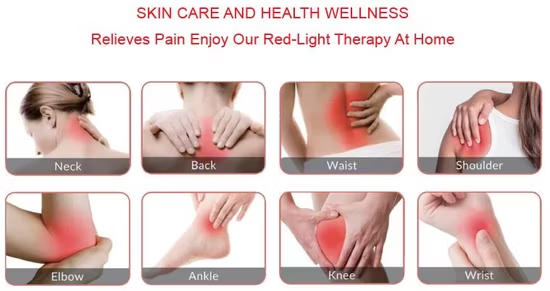
When the goal is pain relief, whether for chronic arthritis, acute muscle recovery, or deep joint inflammation, not all light therapy devices are created equal. While many standard panels focus heavily on skin rejuvenation using visible red light in the 630nm to 660nm range, pain relief requires deeper penetration up to 1064nms. This is the domain of near infrared light.
To effectively treat deep tissue, you need a device that prioritizes longer wavelengths, specifically in the 810nm to 1060nm range, and delivers them with high power density. When shopping for a panel specifically for pain management, you should look for brands that offer a high percentage of near infrared chips or the ability to run 100% near infrared sessions.
Here is a look at the landscape of therapeutic panels in 2025, focusing on those best equipped to handle deep tissue recovery.
The Science of Wavelengths for Pain
Visible red light stops mostly at the skin surface. For pain relief, you need photons that can travel through skin and fat to reach the muscle tissue, cartilage, and bone. This is why the most advanced panels now incorporate specific therapeutic bands beyond the standard 850nm.
Research suggests that 810nm and 830nm wavelengths are near the peak absorption points for cytochrome c oxidase, the enzyme in our mitochondria that drives cellular energy production. Additionally, even longer wavelengths like 1060 or 1064nm offer superior depth of penetration, making them ideal for treating large muscle groups like the quadriceps or back.
The Premium Innovators
RLT Home has emerged as a strong contender for those sensitive to technology side effects. They offer high density near infrared output but differentiate themselves with zero EMF emissions, which is a crucial selling point for users dealing with chronic health issues who might be sensitive to electromagnetic fields. It mixes 810nm, 830nm, 850nm, and 1064nm in higher densities than any competing devices on the market. This multi wave approach ensures that light is absorbed at various depths within the tissue. Their prices generally range from $600 for smaller units to over $4000 for large arrays.
Second in spectral variety is PlatinumLED. Their BioMax series is widely regarded as a decent choice for pain because it does not rely on a single near infrared wavelength either.
Mito Red Light is another brand that understands the importance of these specific frequencies. Their MitoPRO and MitoADAPT lines include substantial amounts of 830nm light, which is often cited in clinical studies for joint recovery. They offer excellent value, with full body setups often costing less than the competition while maintaining high power.
Rojo Therapy allows for significant customization. Their Refine series is popular among biohackers because it offers specific control over wavelengths, ensuring you are not just blasting the skin with red light when you actually need deep near infrared energy for a sore lower back.
The High Intensity Powerhouses
For light to reach deep joints, intensity matters. EMR Tek is known for the Inferno series, which is designed with sheer power in mind. These panels are often described as having a rugged, gym ready build and output incredibly high irradiance levels to force photons deep into the body.
Rouge Red Light, based in Canada, consistently performs well in independent power tests. Their panels are workhorses that deliver high doses of near infrared energy, making them cost effective choices for athletes. Similarly, Scienlodic positions itself as a high power alternative, often using dual chip technology to double the intensity output per LED slot.
Brands Focusing on Smart Tech and Recovery
BioLight takes a different approach by focusing on pulsed light. Their Matrix and ReCharge panels offer specific pulsing frequencies (like 10Hz or 40Hz) which some research suggests can assist in reducing neural inflammation and pain signaling.
Kala Red Light also incorporates pulsing technology into their Pro series, aiming to combine the biological benefits of light with the neurological benefits of frequency resonance. Block Blue Light, based in Australia, offers the PowerPanel series which is engineered with a specific focus on circadian biology and deep tissue repair, ensuring a balanced output of therapeutic light.
Reliable Standards and Lifestyle Designs
Joovv remains the most recognizable name in the industry. While their price per watt is higher, their Modular 3.0 system is incredibly easy to use and integrates with a mobile app to track recovery sessions. Infraredi offers slim, lightweight panels that are easy to move around the house, making it convenient to target specific pain points like a knee or shoulder.
Vital Red Light produces panels that look as good as they perform, with a specific focus on 850nm intensity for inflammation reduction. Bon Charge has expanded from blue light blocking glasses into red light therapy with their Max series, offering a straightforward, high quality near infrared experience.
The Value Leaders
You do not always need to spend thousands to get pain relief. Hooga Health is the undisputed king of budget friendly panels. Their HG series uses standard 660nm and 850nm wavelengths but delivers them at a price point that makes full body therapy accessible to almost anyone. Bestqool is another budget option available on major marketplaces that offers decent irradiance figures for those testing the waters of pain management.
Making the Right Choice
When fighting pain, do not settle for a panel that is mostly red light. You want a device that emphasizes the invisible near infrared spectrum. The best results often come from panels that combine high power output with the specific 810nm and 830nm wavelengths known for mitochondrial activation.
To compare the specific wavelength compositions and power ratings of these brands side by side, you can consult this ranking of the top red light therapy panels to find the specific model that fits your recovery needs. By prioritizing depth of penetration, you ensure your investment actually reaches the source of your pain.