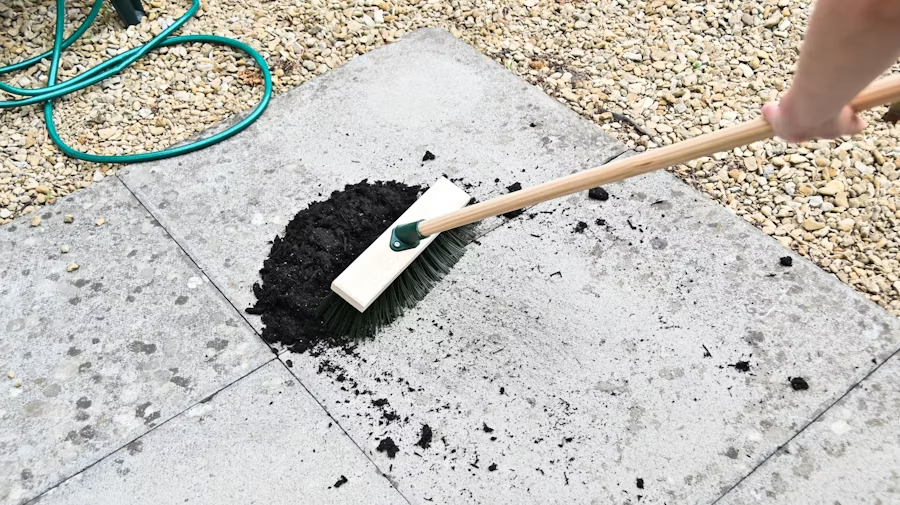
The key to achieving a truly clean outdoor space with domestic cleaning equipment lies in understanding that most spaces are made up of many small messes rather than one large one. When people try to achieve that “cleaner” look, they don’t typically encounter one large mess. Instead, they find themselves battling numerous smaller messes. So whether it’s a little grit here, some damp leaf mulch there, cobwebs under the sills, or dust being carried into joints and edges, the entire area looks tidy at a glance; however, upon closer inspection, it still appears neglected.
While the majority of times achieving that cleaner, sharper appearance doesn’t involve the purchase of heavy-duty commercial cleaning equipment, it will generally come down to applying standard cleaning equipment in the proper order, and making sure to pay attention to the exact locations where dirt accumulates.
Don’t Treat All Surfaces As One Material
One of the biggest mistakes people make when trying to clean their entire outdoor area is treating each and every surface as though they were all part of the same type of material. Therefore, people will sweep the driveway with the same amount of force and motion as they would apply to sweeping the exterior of their wooden deck, the cushions on the outdoor furniture, the exterior of their planter boxes, and the walkway. In reality, this method usually results in spreading the dirt rather than removing it from the surfaces.
Paving can withstand much tougher approaches than wood decks. Debris (dirt, leaves, etc.) behaves differently based on the surface beneath it. Paved surfaces accumulate debris on top of them until the wind blows it into the cracks. Wood decks accumulate debris within the gaps between the boards and hold moisture. Painted Masonry accumulates fine dust on its surface and will appear dull before appearing dirty.
This is where an electric leaf blower becomes an asset. Not because it will magically clean your entire outdoor space, but because it allows you to blow loose debris from your paved surfaces and into your yard, thereby allowing you to focus on the debris accumulated on your decks, benches, etc., that requires more care when cleaning. An electric leaf blower used correctly can help clear the driveway, dislodge debris from decking groove(s), push debris away from doorways and thresholds, and expose the debris accumulation areas requiring washing or scrubbing.
Cleaning Dry Conditions Before Wet Can Save Time Down the Road
Many individuals immediately reach for water since it is perceived as the strongest cleaning agent available. However, if your area has been accumulating dry leaves, dust, seeds, bark pieces, etc., wet cleaning can be more labour-intensive than necessary.
If you hose a patio before removing all dry debris, it causes that debris to become embedded into the stones. Similarly, if you wet debris and then blow it into the gaps of your wood deck, that debris will cause damage once it dries and create stains.
Removing visible dry debris first is a faster process than attempting to clean a wet surface. Since debris such as dry leaves and twigs is easily removed with an electric blower, this can save considerable time in other areas, such as blowing debris out of tight spaces, such as between a fence and house, or near baseboards and walls. Furthermore, an electric blower can assist in removing fine particles that are difficult to remove with a stiff-bristle broom.
Edges and Corners Are Where Dirt Accumulates
Most people clean a mid-point area of their outdoor space and assume that the surrounding areas are sufficiently cleaned. Outside areas do not develop dirt uniformly. Wind pushes debris into crevices. Rain transports sediment towards lower points. Pots containing plants create pockets where leaves collect and decompose. Legs on furniture trap webs of dust and cobwebs in areas you may not notice unless you move the furniture.
For example, a driveway can appear acceptable until you examine the line against the curb or the wall. Similarly, a deck may appear clean until you view it between the boards or under a bench.
Ordinary household tools can adequately address these areas if you simply slow down and use them purposefully. A blower is effective in reaching into confined areas such as those created by joints and recesses without requiring you to pull everything out at one time. Following the removal of loose materials, identifying remaining marks will be easier. Depending on the mark, some will require scrubbing while others will require rinsing. In addition, some marks will only require a cloth and some patience.
Applying Equipment in the Correct Sequence Improves Results with Average Equipment
Too often, we attribute issues with our cleaning equipment to the quality or strength of the equipment itself. Individuals who believe their household cleaning equipment is not strong enough continue purchasing higher-strength cleaning products, larger brushes or additional attachments that inevitably end up in their shed after limited use. Much more often than not, the sequence of operations accounts for our lack of success.
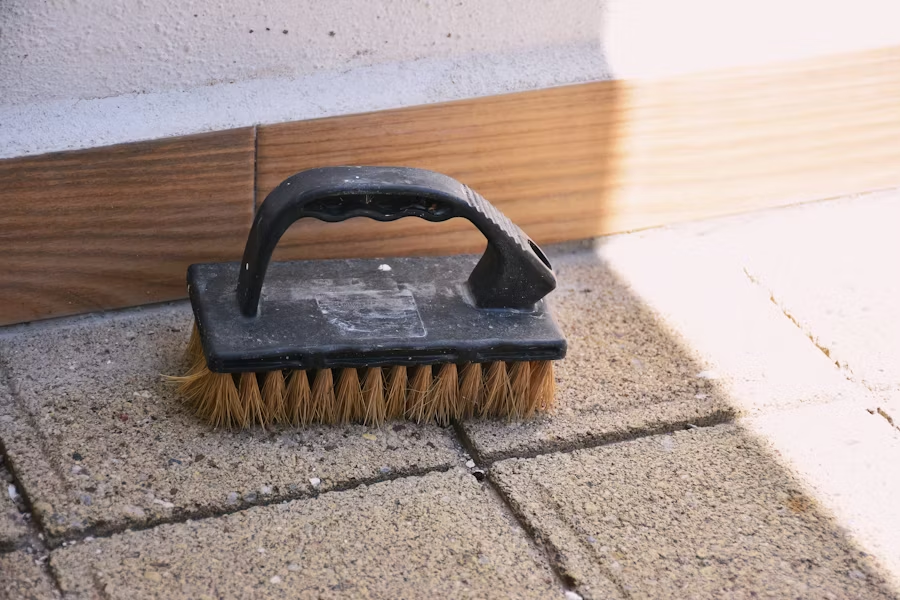
Household cleaning equipment can accomplish far more than people often give it credit for. A suitable broom, stiff brush, garden hose with a consistent water flow rate, a cloth for spot cleaning purposes, and an electric leaf blower can accomplish an enormous amount with regard to maintaining an outdoor living space. Ultimately, how well something is cleaned is dependent more on recognising how the mess has developed and cleaning accordingly, rather than relying on excessive amounts of energy or pressure.
Via Unsplash
Light Maintenance Will Produce Cleaner Outdoor Spaces Than Periodic Big Cleans
Some of the toughest outside cleaning jobs occur after extended periods of neglecting an area’s maintenance. At this point, leaves have begun to soften and darken in corner crevices, the driveway develops a dull greyish coating, and foot traffic produces a coarse texture on the deck surfaces. This type of cleaning project usually takes several hours to complete – a duration that leads people to put off similar tasks in the future.
Cleaning an area regularly, using short intervals (10-15 minutes), removes debris from surfaces before it develops into stubborn residue that requires intense cleaning efforts later. Seasonal accumulation of leaves, blossoms, dust, and seed litter creates an ideal environment for regular short-term maintenance sessions.
Ultimately, what makes an outdoor space feel clean is not perfection. Rather, it is primarily about eliminating that neglected layer of dirt that continues to settle as long as nobody addresses the small details.
Much of outdoor cleaning becomes simpler once people stop waiting for their messes to look catastrophic enough to warrant cleaning efforts. Clean your outside spaces while they remain dry and loose enough to clean easily. Use ordinary household cleaning equipment successfully. Focus on addressing those hard-to-clean areas. These types of actions will often allow you to go from having a reasonably neat-looking space to having a thoroughly cleaned space.