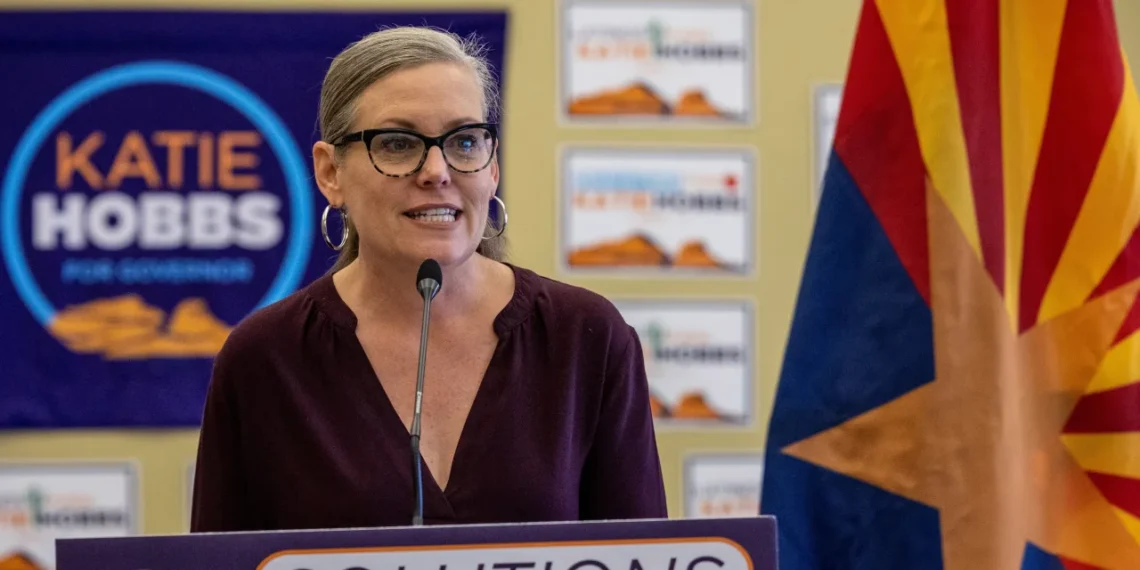
“Gov Katie Hobbs D-Ariz. California incompetent” have surged online as users look for clarification about whether Arizona Governor Katie Hobbs made statements criticizing California’s government, its policies, or its governance.
While political content often circulates rapidly on social media, many claims are taken out of context, misinterpreted, or based on commentary rather than verified quotes.
This article explains the context behind the search term, how political narratives spread, and what is publicly documented, helping readers understand the origins and accuracy of the trending topic.
1. Why the Phrase “Katie Hobbs California Incompetent” Is Trending
The phrase appears online primarily for three reasons:
• Social media reinterpretation
Platforms like X (Twitter), Reddit, and TikTok often take political statements and shape them into shorter, more provocative phrases.
• Commentary from political influencers
Sometimes commentators attribute stronger or exaggerated wording to public officials, even when the official did not use those words.
• Discussions about policy comparisons
Arizona and California are frequently compared on:
-
Budget management
-
Housing
-
Water policy
-
Border security
-
Economic growth
These comparisons often lead to claims, opinions, or criticisms framed as quotes.
Importantly:
There is no verified record of Gov. Katie Hobbs calling California “incompetent.”
Most versions of the phrase come from political commentary, not official statements.
2. What Gov. Katie Hobbs Has Publicly Said About State Comparisons
Gov. Katie Hobbs (D-Arizona) has commented on various policy differences between states—especially regarding:
-
Migration patterns
-
Economic competition
-
Water management
-
Energy and climate policy
These discussions often highlight Arizona’s approaches rather than making direct attacks on other states.
When governors compare states, their messaging usually focuses on:
✔ Policy strengths and weaknesses
✔ Economic competitiveness
✔ Regulatory differences
✔ Impacts of national trends
But there is no official transcript or press briefing in which she used the word “incompetent” to describe California’s government.
3. How Claims About Political Figures Spread Online
Understanding how the phrase gained traction requires understanding misinformation patterns:
• Misquoted headlines
Some blogs or partisan pages use sensational headlines that imply stronger statements than were actually made.
• Out-of-context clips
Short video clips may remove important context from a longer interview.
• AI-generated content
Increasingly, fabricated quotes or edited videos circulate without verification.
• Satire mistaken for fact
Content originally intended as satire sometimes gets shared as real news.
• Commentator paraphrasing
Pundits may summarize criticism in exaggerated terms, which later get repeated as “quotes.”
These trends cause phrases like “California incompetent” to attach themselves to public officials—even without official confirmation.
4. Policy Differences Between Arizona and California Often Fuel Debate
The states have major differences that lead to these narratives:
• Tax structure
California has higher taxes; Arizona emphasizes lower tax rates.
• Housing cost
California’s housing crisis often sparks comparison with Arizona’s more affordable market.
• Water management
Western water scarcity places both states under national scrutiny.
• Energy transitions
California has aggressive renewable energy policies; Arizona’s timeline is more moderate.
• Business climate
California faces criticism from some industries; Arizona markets itself as business-friendly.
These topics create an environment where political actors and commentators—not necessarily the governor herself—criticize California’s governance.
5. How to Verify Claims About Political Statements
To avoid misinformation, readers should look for:
✔ Official transcripts
Statements made during press conferences, interviews, or public speeches.
✔ Government press releases
Arizona Governor’s Office documents are publicly available.
✔ Direct video sources
Unedited footage reveals whether a claim is valid.
✔ Reputable news outlets
Well-established media organizations verify quotes before publication.
✔ Fact-checking platforms
Sites like AP News, Reuters Fact Check, and PolitiFact regularly analyze trending claims.
When checked through verified sources, the claim that Katie Hobbs called California “incompetent” has no evidence.
6. Why Political Narratives Get Amplified Even Without Verified Quotes
Even when a statement is not real, the narrative may continue spreading because:
• People share information quickly without checking sources
• Content that criticizes a state or politician tends to go viral
• Algorithms prioritize emotional or controversial content
• Political tribes amplify narratives that support their viewpoint
• Misunderstandings evolve into “accepted” talking points
This is how many phrases—like “Gov. Katie Hobbs California incompetent”—become widely searched despite lacking factual basis.
Conclusion
The search phrase “Gov Katie Hobbs D-Ariz. California incompetent” reflects an online narrative shaped by commentary, political debate, and social media amplification.
There is no verified evidence that Governor Katie Hobbs made such a statement. Instead, the phrase likely originates from interpretations, exaggerations, or misquoting related to broader policy comparisons between Arizona and California.
Understanding how such narratives form helps readers separate fact from misinformation and engage more critically with political content online.