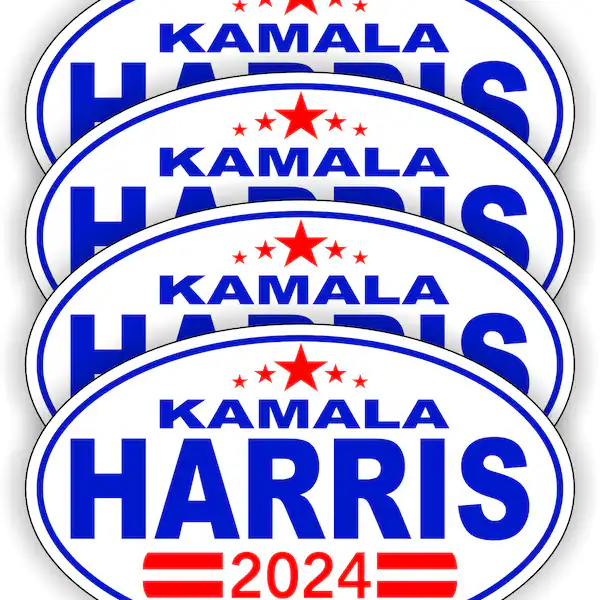
Political bumper stickers have long been a powerful form of self-expression, and the Kamala Harris bumper sticker is no exception. Whether spotted on highways, parked cars, or social media photos, these stickers represent more than a political preference—they reflect identity, values, activism, and civic engagement.
As the first woman, first Black American, and first South Asian American Vice President of the United States, Kamala Harris has become a symbol of change for many people. This has fueled widespread interest in Kamala Harris bumper stickers, making them one of the most searched political merchandise items in recent election cycles.
This article provides a fully informative, SEO-optimized guide that explains what Kamala Harris bumper stickers represent, why people use them, popular styles, controversies, and their role in modern political culture.
What Is a Kamala Harris Bumper Sticker?
A Kamala Harris bumper sticker is a political decal or adhesive sign displayed on vehicles to show support for Kamala Harris, her policies, her leadership, or broader Democratic Party values. While commonly placed on car bumpers, these stickers are also used on laptops, water bottles, notebooks, and windows.
At its core, a Kamala Harris bumper sticker is about visibility. It allows individuals to publicly communicate:
-
Political alignment
-
Support for diversity and representation
-
Belief in democratic participation
-
Advocacy for specific social or policy issues
Political bumper stickers have existed for decades, but Harris’s historic role has made her merchandise especially meaningful to supporters. For many, displaying her name is not just about an election—it’s about representation, progress, and inclusion.
Why Kamala Harris Bumper Stickers Are So Popular
The popularity of Kamala Harris bumper stickers is closely tied to her historic and symbolic significance in American politics. As Vice President, she represents milestones that resonate deeply with many communities.
One major reason for their popularity is representation. For women, people of color, immigrants, and younger voters, Harris symbolizes breaking barriers that once seemed unmovable. A bumper sticker becomes a small but visible celebration of that progress.
Another reason is political engagement. In an era where social media dominates political conversation, bumper stickers remain a real-world, offline form of expression. They signal participation in democracy beyond the ballot box.
Additionally, these stickers gained traction during:
-
The 2020 presidential election
-
Major policy debates
-
Moments of national conversation around equality and justice
For supporters, placing a Kamala Harris bumper sticker on a car is a way of saying, “I stand for these values.”
Popular Kamala Harris Bumper Sticker Designs and Messages
Not all Kamala Harris bumper stickers look the same. In fact, their variety is part of their appeal. Designs range from simple and serious to bold, artistic, and even humorous.
Common Design Styles
-
Text-based slogans such as “Kamala 2020”, “Harris for the People”, or “Madam Vice President”
-
Portrait-style stickers featuring illustrated or photographic images
-
Minimalist designs with just her name or initials
-
Intersectional messages combining Harris’s name with causes like equality, voting rights, or women’s empowerment
Color schemes often reflect:
-
Red, white, and blue patriotic themes
-
Purple, symbolizing unity
-
Bright, modern colors aimed at younger audiences
These designs allow supporters to choose a sticker that aligns with both their political beliefs and personal style.
Political and Social Meaning Behind Kamala Harris Bumper Stickers
A Kamala Harris bumper sticker carries layered meaning. Politically, it signals support for:
-
Democratic Party leadership
-
Progressive or center-left policies
-
The Biden–Harris administration
Socially, it often represents:
-
Support for gender equality
-
Advocacy for racial justice
-
Belief in diverse leadership
-
Pride in democratic participation
For some, the sticker is also an act of visibility and courage. Displaying political views publicly can invite conversation, debate, or even criticism. Choosing to do so reflects confidence in one’s beliefs.
In this sense, Kamala Harris bumper stickers are not passive decorations—they are statements of identity and values.
Controversies and Reactions to Kamala Harris Bumper Stickers
Like all political symbols, Kamala Harris bumper stickers can provoke strong reactions. While supporters see them as empowering, critics may view them as controversial or polarizing.
Some common reactions include:
-
Positive engagement, such as conversations or gestures of support
-
Political disagreement, expressed through debate or opposing stickers
-
In rare cases, vandalism or hostility, which reflects broader political tensions
These reactions highlight an important reality: bumper stickers exist in the public sphere, where free expression meets differing opinions. Despite this, many supporters continue to display them as a form of peaceful political speech.
The controversy itself underscores the sticker’s impact—it shows that symbols still matter in modern political discourse.
The Role of Bumper Stickers in Modern Political Culture
In the digital age, some might assume bumper stickers are outdated. However, the continued popularity of the Kamala Harris bumper sticker proves otherwise.
Bumper stickers play a unique role because they are:
-
Unfiltered – not controlled by algorithms
-
Local and visible – seen by real people in real spaces
-
Personal – chosen intentionally by the individual
They turn everyday activities like driving or parking into moments of political communication. In a time of online polarization, physical symbols can humanize political participation by reminding us that democracy lives among neighbors, not just online profiles.
For younger generations especially, bumper stickers are becoming part of a broader culture of activism, self-expression, and identity politics.
Conclusion: Why the Kamala Harris Bumper Sticker Matters
The Kamala Harris bumper sticker is more than a political accessory. It is a symbol of history, representation, and civic voice. For supporters, it represents pride, progress, and participation in shaping the future. For observers, it reflects the ongoing importance of visible political expression in everyday life.
Whether admired, debated, or criticized, these stickers show that democracy is not silent. It speaks from car bumpers, windows, and public spaces—one small sticker at a time.
In the end, the significance of a Kamala Harris bumper sticker lies not in the adhesive, but in the values and conversations it represents.