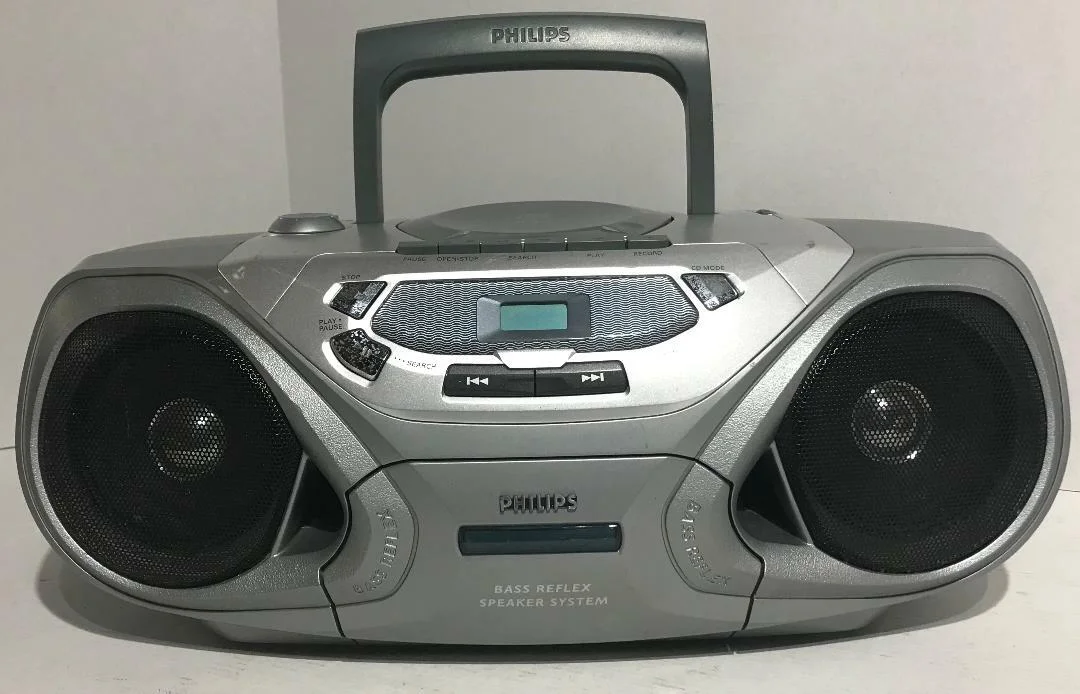
Philips Magnavox Az7448 or Az7444: When collecting vintage electronics, portable CD players from the early 2000s still have a certain charm. Among them, the Philips / Magnavox AZ7448 and AZ7444 models stand out to some enthusiasts for their portability and features like ESP / anti-skip protection. In this article, we’ll examine what we know about these models: their specs, strengths & weaknesses, how to maintain or restore them, how to choose one, and what to watch out for.
Overview: What Are the AZ7448 and AZ7444 Portable CD Players?
The AZ7448 and AZ7444 are part of Philips’ (and Magnavox’s licensed branding) line of portable compact disc (CD) players, marketed with features such as skip protection, battery operation, and simplicity for on-the-go listening.
-
The AZ7448 shows up in listings as a “10 Sec ESP Portable CD Player” under the Magnavox / Philips “AZ” series.
-
The AZ7444 has a dedicated owner’s manual listing and is marketed under “Portable CD Player” by Philips / Magnavox.
-
Retail descriptions of the AZ7444 indicate typical specs: powered by 2 × AA batteries, “PGreen” color scheme, and includes a pair of retro foam headphones in some restored listings.
These players were part of the wave of portable audio devices that competed with Sony Discman, I believe, and aimed to give users the ability to carry their CD libraries in a compact form.
Because of their age, many surviving units are in used or “for parts” condition in collector marketplaces.
Key features (as deduced from manuals and listings):
-
Battery operation (2 AA) — ideal for portability but subject to battery drain.
-
Skip / anti-shock / ESP (Electronic Skip Protection) — a mechanism to reduce skipping when bumped or moved.
-
Basic CD controls (play, pause, stop, next, previous).
-
Compatibility with standard audio CDs (not necessarily MP3 or CD-RW).
-
Lightweight, compact form factor.
Because these models are relatively obscure today, the community often relies on service manuals, user manuals, and marketplace listings for details.
Detailed Specifications & Differences Between AZ7448 & AZ7444
To help collectors or repairers, here’s a more detailed breakdown and comparison of specs (where known) and differences:
| Feature | AZ7448 | AZ7444 |
|---|---|---|
| Model designation / listing | Known as “10 Sec ESP Portable CD Player AZ7448 /17z” in listings. | Philips / Magnavox “Portable CD Player AZ7444 / Owner’s Manual” is found in manual archives. |
| Battery type | Likely uses 2 AA batteries (common with many AZ series portable players) | Confirmed 2 × AA battery specification in product listing. |
| Color / design | Listings show standard body (plastic, likely black or dark gray) | One listing shows a “PGreen” color version including foam headphones. |
| Skip / ESP | The AZ7448 listing mentions “Skip Protection.” | While the manual doesn’t always explicitly call “ESP,” many in the AZ line include similar anti-skip features. |
| Availability / condition | Often found “for parts or not working” — for example, one listing says “turns on but always says ‘no disc’.” | Some units are restored / refurbished in vintage shops. |
| Manual / support | Harder to find full service info; mostly rely on user listings and spare catalogs | A 28-page owner’s manual exists in archives for the AZ7444 model. |
Important note: Because of limited documentation, many functional expectations are inferred from related AZ series players, common features of CD players from that era, and surviving listings.
One practical difference is that the AZ7444 has more documented support (manuals) available, making repairs or understanding operation somewhat easier than AZ7448, whose documentation is minimal.
Strengths, Weaknesses & Collector Appeal
For someone considering owning or restoring one of these units, here are the pros, cons, and what makes them attractive to collectors.
Strengths & Appeal
-
Vintage / Nostalgia Value
These devices evoke the era before MP3 players and smartphones. For collectors of portable audio gear, having working CD players from the 1990s–2000s is appealing. -
Portability & Simplicity
With AA battery compatibility and compact design, they offer a simple, self-contained music listening experience. -
Skip Protection (ESP / Anti-Skip)
The inclusion of skip-protection is a key feature, especially for portable use, making them more resilient to minor movement. -
Selectable for restoration / repair hobbyists
Because many units are sold “for parts,” they’re excellent projects for people who like refurbishing vintage electronics.
Weaknesses & Challenges
-
Aging mechanical parts
Motors, belts, laser assemblies degrade over time, making skipping, read errors, or motor failure common. -
Battery drain / power supply issues
Old capacitors or aging circuits may draw too much power, making battery life short or unstable. -
Parts scarcity
Replacement parts (laser diode, spindle motor, belts, CCD assemblies) may be hard to find or expensive. -
Limited features
These players likely do not support MP3, CD-RW, or other modern features, which reduces practical usage compared to newer devices. -
Condition variability
Many listings warn “not working” or “no disc” errors.
Given these, the ideal collector’s unit is one already in good condition, or one with spare parts available.
How to Test, Repair & Maintain AZ7448 / AZ7444 Units
If you have one of these players, or are considering buying “for parts” to repair, here’s a practical guide for testing, repair, and maintenance.
Testing & Diagnosis
-
Power On / Battery Check
Insert new fresh AA batteries (alkaline or NiMH). See whether power lights up or the display shows “no disc” or “insert disc.” -
Load / Eject Mechanism
Test whether the lid / tray opens and closes smoothly. Check for mechanical failures in hinges or rails. -
Laser / Read Test
Insert a known good CD (audio). Listen whether the player spins the disc, reduces to lower rpm, or displays track numbers. If it spins but says “No Disc,” the laser assembly or alignment may be failing. -
Skip / Movement Test
While playing a CD, gently jostle the unit to test skip protection. If it jumps, the buffer or shock suspension may have deteriorated. -
Check for Noise / Motor Sounds
Abnormal whirring, buzzing or misalignment noise can indicate spindle motor or bearing wear.
Common Repairs & Solutions
-
Clean the laser lens using isopropyl alcohol (very gently) or special CD lens cleaning cloths.
-
Replace belts or elastic bands inside (for tray or disc spin) if belt slippage or lack of torque is observed.
-
Align or reposition laser head if tracking is off (requires precision and experience).
-
Replace capacitors / electrolytic caps especially around the power supply section to reduce hum, leakage or excessive current draw.
-
Lubricate mechanical parts (rails, hinges) with light, non-corrosive grease.
Given the scarcity of parts, sometimes donor units must be used for spares. Always keep backups of original parts and take photos before disassembly.
Preventive Maintenance
-
Store in a dry, moderate-temperature environment to reduce moisture damage.
-
Avoid heavy mechanical shocks or drops.
-
Use only good quality batteries and remove them if storing long term (to avoid leakage).
-
Periodically open and clean internal dust and oxidation.
How to Choose a Good Unit & What to Look for When Buying
If you plan to purchase an AZ7448 or AZ7444 unit (for collection or repair), here are tips and criteria to evaluate potential buys.
1. Condition & Functionality Claims
-
Prefer units that claim “tested working” or “plays discs.”
-
Be cautious of “for parts / not working” unless you’re confident in repair skills.
-
Check photos for visible signs of damage (cracked plastic, broken hinges, missing buttons).
2. Accessories & Completeness
-
Having original headphones, manuals, battery covers, or cases raises value.
-
For AZ7444, having the manual (28-page PDF or print) may help with restoration.
3. Price vs Repair Costs
-
Compare listing price with potential expense of laser, belts or motor replacement.
-
A unit that seems cheaper but is missing parts may cost more overall to repair.
4. Seller Reputation & Return Policy
-
Prefer sellers who allow returns or disclaim that they have tested the unit.
-
Ask the seller to test with a known good disc and share a video.
5. Region & Model Marking
-
Verify model / region marking (e.g. “AZ7444 /17Z” or similar suffix) to match manuals and parts.
-
Sometimes color variants or special editions (e.g. “PGreen”) are included in listings of the AZ7444.
6. Service Parts / Donor Units
-
If a listing is nonfunctional but has relatively intact parts (mechanics, motor, optical), it might serve as a donor for your repair candidate.
Real User Feedback & Marketplace Observations
Operating vintage CD players long term can uncover patterns. Here’s what users and marketplace listings suggest about these AZ models:
-
Many AZ7448 units are sold as “not working” or with “no disc” errors, which is a common symptom in aging CD players.
-
The AZ7444 model is sometimes refurbished and sold in vintage shops, with the aesthetic “retro” presentation (colored body, foam headphones).
-
The manual archive confirms that AZ7444 has a preserved user manual, which helps users or repairers understand wiring, controls, and operation.
-
Listings often emphasize “skip protection” or “ESP” as key selling points, which was a marketing feature to try to improve reliability in portable contexts.
These observations confirm that these devices are known among vintage audio circles, but are usually in used / collector trade rather than mainstream circulation.
Conclusion & Tips for Collectors / Users
The Philips / Magnavox AZ7448 and AZ7444 portable CD players are intriguing relics from the era of portable digital audio. While not widely documented, they hold appeal for vintage audio fans, collectors, and hobbyist repairers. Key takeaways:
-
The AZ7444 has better documentation (manuals) available, which makes it somewhat easier to understand and restore.
-
Both models rely on mechanical and optical parts that degrade over time; typical failure modes include laser misalignment, worn belts, motor issues, and power issues.
-
If you acquire one, always test with fresh batteries and a known good CD.
-
Be prepared to source parts carefully — you might need donor units, alignment skills, or specialist components.
-
When buying, seek units claimed “working” or at least tested with video proof; avoid units with too much missing hardware unless you’re comfortable with heavy repair work.
If you like, I can also compile a repair guide PDF, or a parts compatibility list (which lasers, belts, motors match) for these models.