Mobile connectivity limits have shattered. For a decade, the industry operated within the rigid confines of 4G LTE, where bandwidth scarcity and latency spikes dictated architectural decisions. 5G does not merely offer a speed boost; it obliterates the infrastructure constraints that previously choked software.
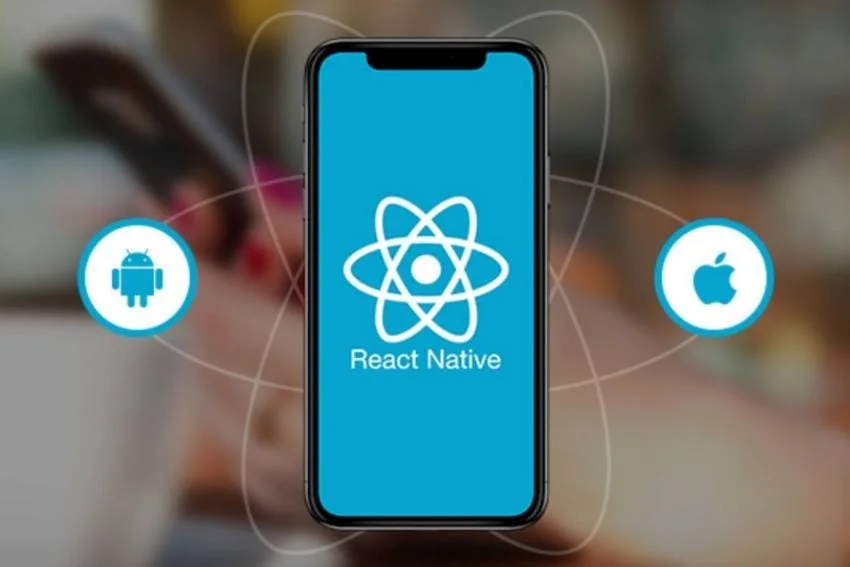
This infrastructure upheaval demands a total architectural rethink within the React Native ecosystem. Cross-platform frameworks, often critiqued for the performance cost of the JavaScript bridge, suddenly find their historical bottlenecks negated by sheer network throughput, allowing the framework to perform at a level previously reserved for pure native builds.
The Enterprise Panic and Structural Demand
Enterprises are discovering their current mobile portfolios cannot handle the gigabit speeds and sub-millisecond latency users now expect. Legacy systems are failing to scale, creating a scramble for specialized talent capable of bridging this gap.
Organizations are aggressively filtering for top react native app development companies to completely re-engineer their digital touchpoints, ensuring applications handle massive data loads without UI thread blocking.
It is no longer about optimizing a fetch request; it is about redefining the legal limits of a mobile application’s capabilities without destroying battery life or inducing thermal throttling. The market has shifted from maintenance to a complete structural overhaul.
The Latency Bottleneck and Legacy Defense
Past mobile engineering was largely an exercise in defensiveness. In the 4G era, the network acted as the fragile link. Engineers burned cycles optimizing bundle splitting, devising aggressive caching layers, and writing labyrinthine logic to manage offline states. You assumed the connection would fail, and built interfaces to hide that inevitable failure. Spinners and skeleton screens were merely symptoms of a pipe too narrow for the software’s ambition.
React Native often faced skepticism here due to its reliance on the bridge for serialization. When the bridge was congested and the network lagged, the user experience collapsed into a jagged, unresponsive state. That serialization penalty, combined with network jitter, created a performance ceiling.
With ultra-wideband connectivity now live, that defensive posture is obsolete. The bottleneck has shifted entirely from the network to the silicon in the user’s hand. This paradigm shift places immense pressure on mobile app developers, who must now orchestrate real-time data ingestion rather than designing static screens.
The required competency has evolved beyond JavaScript proficiency; it now demands a deep understanding of network topology and synchronization protocols, formerly the domain of high-frequency trading systems.
Eradicating Latency for True Real-Time States
Latency was the silent killer of immersion. In a 4G context, a 50-millisecond round-trip time was acceptable for a news feed but fatal for competitive gaming or augmented reality. 5G drives latency down to near 1 millisecond. For React Native, this opens a direct, almost hardwired line to the server.
Take financial trading or live auctioning platforms. Previously, WebSocket connections over LTE were prone to packet loss, forcing developers to build complex reconciliation logic for stale data. With 5G, the data pipeline is effectively instantaneous. React Native’s asynchronous architecture aligns perfectly here, making it even more compelling for businesses looking to hire app developers who can build real-time, performance-critical mobile experiences.
The framework can subscribe to high-frequency streams and update the Virtual DOM in real-time without the user perceiving a fetch delay. Interfaces can now mirror server state 1:1, rendering “pull-to-refresh” mechanics an archaic relic.
Edge Computing and the Thin Client Revolution
Perhaps the most disruptive capability is the migration of computing power from the handset to the network edge. React Native apps have historically struggled with heavy mathematics—complex image manipulation or physics engines—because the JavaScript thread is single-core and not optimized for raw number crunching.
5G inverts this relationship. The app can now ship raw input data to a nearby Multi-access Edge Computing (MEC) node, process it on workstation-class GPUs, and receive the rendered result in milliseconds. The smartphone becomes a thin client, a high-resolution glass pane for intelligence residing on the network.
This changes the game for AI integration. Instead of running a quantized, low-accuracy model on the device via TensorFlow.js, a React Native app can stream video frames to an edge server running a massive model, receiving precise bounding boxes instantly. The “smart” app no longer requires flagship hardware; it only requires a 5G signal.
Streaming Assets for the Immersive Web
Augmented Reality (AR) often stalled because 3D assets were too heavy to bundle and too slow to download. React Native, utilizing bridges to ARKit, could render scenes, but fidelity was capped by local storage. With 5G throughput exceeding 10 Gbps, high-fidelity textures and polygon-dense models no longer need to reside in the app binary.
They can be streamed linearly. This enables “lightweight” installation footprints that expand into massive, persistent worlds upon launch. A retail application can dynamically superimpose a photorealistic piece of furniture into a physical room without a loading bar. The friction of asset acquisition vanishes.
The IoT Mesh and Device Density
The concept of a “mobile user” now encompasses the surrounding environment. 5G specifications support a connection density of one million devices per square kilometer. For the React Native ecosystem, this unlocks the potential for Massive Machine Type Communications (mMTC). Developers can build control interfaces for entire smart cities from a single codebase.
React Native’s hot-reloading allows for fast prototyping of dashboards visualizing thousands of simultaneous data points. In manufacturing, a tablet app can visualize telemetry from hundreds of robotic arms in real-time, overlaying thermal warnings without UI lag. The app functions as a universal controller, ingesting a firehose of MQTT messages that would have choked a 4G connection.
Uncompressed Media and Telemedicine
Video remains the dominant bandwidth consumer, and 4G struggled to push anything beyond 1080p without compression artifacts. 5G facilitates pristine 8K streams. For React Native applications in telemedicine, this eliminates “adaptive bitrate” compromises.
Medical applications can stream multi-angle, high-definition surgical feeds to students without dropped frames. Telemedicine platforms can support video calls with a resolution high enough for remote dermatological diagnosis.
The framework’s ability to wrap native players like ExoPlayer ensures the stream is handled efficiently at the OS level, while the JavaScript layer manages interactive data overlays without impacting decode performance.
The Connectivity-Native Architecture
The fusion of React Native and 5G is not merely about velocity; it is about removing the shackles that forced engineers to write compromised software. The industry is migrating from “offline-first” defensiveness to “connectivity-native” aggression.
The application is no longer an island of logic syncing intermittently with the world; it is a fluid, continuous extension of the cloud. This evolution requires a rigorous standard of engineering and a fundamental reimaging of what a mobile interface can achieve.