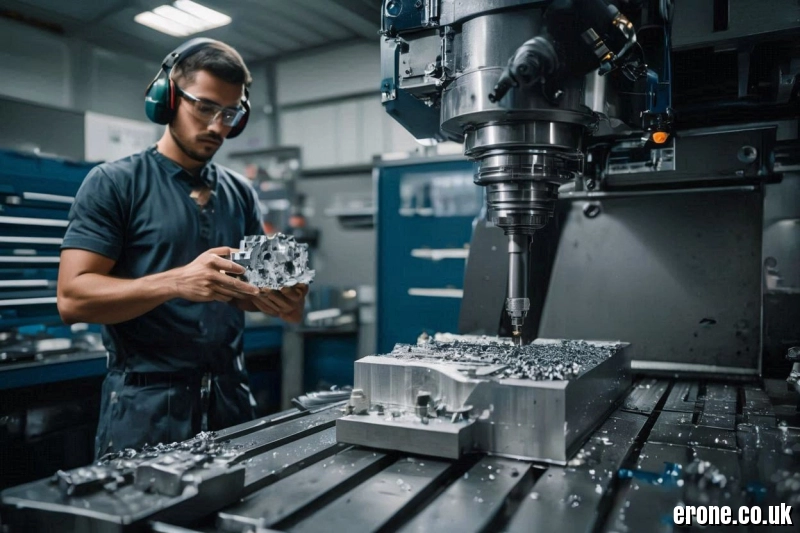
The machine shop at 2 AM has a particular sound. It’s not the roar of the daytime, when people are yelling over spindles and forklifts beep their warnings. It’s a hum. A drone of machines at work, slow and steady, nearly meditative, and as they have nothing to watch over, their doors shut, and their lights throwing long blue rectangles on the concrete floor.
I am in the presence of Marcus who is the supervisor of night shift. He has twenty-two years of CNC machine running. A fine gray grime permanently stains his hands, which cannot be removed by soap.
I listen. I hear the machine.
“No,” I admit.
He nods, still listening. “It’s nervous.”
You push it, it’ll chatter. Leave a bad finish. The part passes inspection, maybe, but it’s stressed. It’ll move later, during assembly. The customer won’t know why it doesn’t fit. They’ll blame their design. But it’s not their design. It’s us. It’s me not listening.”
But the machine’s sound shifts, just slightly. The whine evens out. “There,” he says. “Happy now.”
The Silence of the Day Shift
During the day, the shop is a different world. Salespeople are on the phone. Engineers are reviewing files. Project managers are updating spreadsheets. Everyone is busy, moving, talking.
But in the quiet moments, when a day shift machinist finishes a setup and hits the green button, they do the same thing Marcus does. They listen. They watch the chips curl off the tool. They run a finger along the first part, not measuring, just feeling. This is the ritual. It’s not in the quality manual.
The One That Got Away
Every machinist has a story about the one that got away. The part they shipped that came back. Marcus has his.
“Five years ago,” he says, still staring at the now-happy machine. “Medical component. Titanium. I was rushing. We had a deadline, the customer was breathing down my neck. I skipped a finish pass. The part measured fine.
He pauses. The machine hums.
“Six months later, I get a call. The part failed in surgery. Not catastrophic, thank God. But it didn’t perform. The surgeon had to switch to a backup. The patient was under longer than necessary. All because I rushed. All because I didn’t listen.”
He looks at me. Why are you asking me why I am here at 2 AM? Why I am the one who listens to nervous machines? He says because I am the guy who did not hear that day. And I will have to pay my life long to recoup it.
What You’re Actually Paying For
When you send a RFQ to a shop, you’re not just paying for machine time and material. You’re paying for Marcus’s guilt. You’re paying for the night shift rituals. You’re paying for the decades of mistakes that taught someone to hear the difference between a happy machine and a nervous one.
You’re paying for the institutional memory of a thousand tiny failures that never happened to your part because they happened to someone else’s, years ago, and the lesson was absorbed into the fingertips of every machinist in the building.
This is the invisible line item on every invoice. It’s never listed. It’s never discussed. But it’s the most important thing you’re buying.
The Part That Arrives
When your box comes at last, when you reach out and draw out that perfect, shining part, when you feel the edge of your thumb, when you find it sliding across, and you find out that it is not hard at all, but smooth, and solid, and sure, you will be too blind to know about Marcus. You will never hear of the 2 am changes or the guilt or the listening.
You will simply know that it is right. Solid. Quiet.
That silence is the voice of a promise made. It is the voice of a person devoted enough to listen or pay attention when nobody is around. It’s the sound of CNC machining services that understand the difference between making a part and honoring a trust.
The machine made the chips. But Marcus made the part.