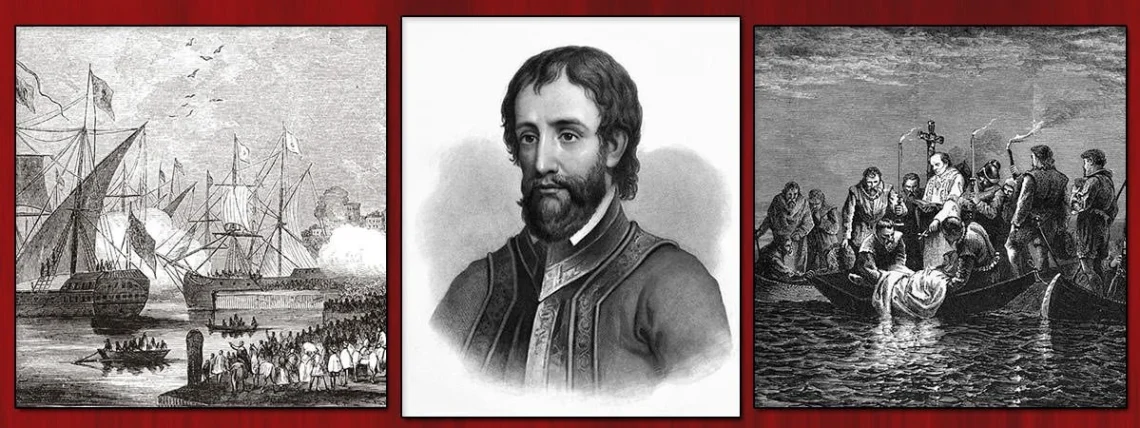
Villan Facts About Hernando De Soto: When people hear the name Hernando de Soto, they often think of an explorer, a conquistador, and a key figure in early American history. He is commonly associated with the exploration of the southeastern United States and the discovery of the Mississippi River by Europeans. However, behind this historical reputation lies a far more troubling reality.
Who Was Hernando de Soto and Why Is He Controversial?
Hernando de Soto was a Spanish conquistador born around 1496 in Spain. He rose to prominence through his involvement in the conquest of Central and South America, particularly during Francisco Pizarro’s invasion of the Inca Empire. His success there earned him wealth, power, and royal favor.
However, controversy surrounds de Soto because his expeditions were driven by greed, domination, and ruthless ambition. In 1539, he led a massive expedition into what is now the southeastern United States, claiming land in the name of Spain while treating Indigenous populations as obstacles rather than human beings.
Unlike explorers motivated by trade or diplomacy, de Soto relied on force, intimidation, and fear. His actions set the stage for widespread suffering, making him a deeply divisive figure in history.
Extreme Violence Against Indigenous Peoples
One of the most disturbing villain facts about Hernando de Soto is his systematic violence toward Native American tribes. His expeditions were marked by brutality, not cooperation.
Historical accounts describe:
-
Mass killings of Indigenous villagers
-
Public executions to spread fear
-
Burning of towns and food supplies
-
Attacks on non-combatants, including women and elders
De Soto used violence as a strategy to extract food, labor, and information. Any resistance—real or perceived—was met with overwhelming force. Entire communities were destroyed simply for refusing to submit.
These actions caused irreparable harm to Native populations, both physically and psychologically, long before permanent European settlements were established.
Enslavement, Hostage-Taking, and Human Cruelty
Another deeply villainous aspect of Hernando de Soto’s legacy is his widespread use of enslavement and hostage-taking. Indigenous people were frequently captured and forced to:
-
Carry heavy supplies
-
Serve as guides under threat of death
-
Act as human shields during conflicts
De Soto often kidnapped tribal leaders to control entire communities. If demands were not met, hostages were executed or tortured. This tactic created fear and chaos, destabilizing societies that had existed for generations.
Unlike accidental cruelty, these actions were deliberate and calculated, making them especially condemnable by modern ethical standards.
The Spread of Disease and Cultural Destruction
While violence caused immediate devastation, disease and cultural collapse were among the most long-lasting consequences of de Soto’s expedition.
His men unknowingly introduced European diseases such as:
-
Smallpox
-
Measles
-
Influenza
Native populations had no immunity, leading to massive death tolls. Entire tribes were wiped out within years of contact.
Beyond physical death, de Soto’s actions led to:
-
Collapse of social structures
-
Loss of traditions and languages
-
Destruction of sacred sites
-
Forced displacement of communities
This cultural erasure is one of the most tragic villain facts associated with Hernando de Soto.
Failure, Death, and a Legacy of Ruin
Despite all the violence and suffering he caused, Hernando de Soto ultimately failed in his mission. He found no vast gold reserves in North America, no permanent colony, and no lasting success.
In 1542, de Soto died of illness near the Mississippi River. Fearing that Indigenous people would see his death as weakness, his followers secretly sank his body into the river at night.
His expedition left behind:
-
Thousands of Indigenous deaths
-
Broken alliances
-
Starvation among surviving tribes
-
No lasting Spanish settlement
In essence, de Soto destroyed lives without achieving meaningful results, making his campaign both brutal and pointless.
Why Modern Historians View Hernando de Soto as a Villain
Today, many historians and educators reexamine Hernando de Soto’s actions through a more honest lens. While earlier narratives praised him as a bold explorer, modern scholarship emphasizes the human cost of his ambition.
He is increasingly viewed as:
-
A symbol of colonial brutality
-
A perpetrator of human rights abuses
-
A catalyst for Indigenous population collapse
-
An example of unchecked imperial greed
This shift does not erase history—it corrects it. Understanding de Soto’s villainous actions helps ensure that the suffering of Indigenous peoples is acknowledged, remembered, and respected.
Conclusion
The story of Hernando de Soto is not one of heroic discovery but of violence, exploitation, and destruction. While he played a role in shaping early American history, the cost of his expeditions was paid almost entirely by Indigenous communities.
Recognizing the villain facts about Hernando de Soto allows us to move beyond glorified myths and confront the harsh realities of colonial expansion. History becomes more meaningful when it includes truth, accountability, and compassion.
Frequently Asked Questions (FAQs)
1. Why is Hernando de Soto considered a villain today?
Because of his extreme violence, enslavement of Indigenous people, and destruction of entire communities.
2. Did Hernando de Soto kill Native Americans directly?
Yes, historical records confirm direct killings and ordered executions.
3. What tribes were affected by de Soto’s expedition?
Many Southeastern tribes, including Mississippian cultures, suffered greatly.
4. Did de Soto succeed in his expedition goals?
No, he failed to find gold or establish a lasting colony.
5. Why is de Soto still taught in schools?
He remains historically significant, but modern education increasingly includes the negative consequences of his actions.