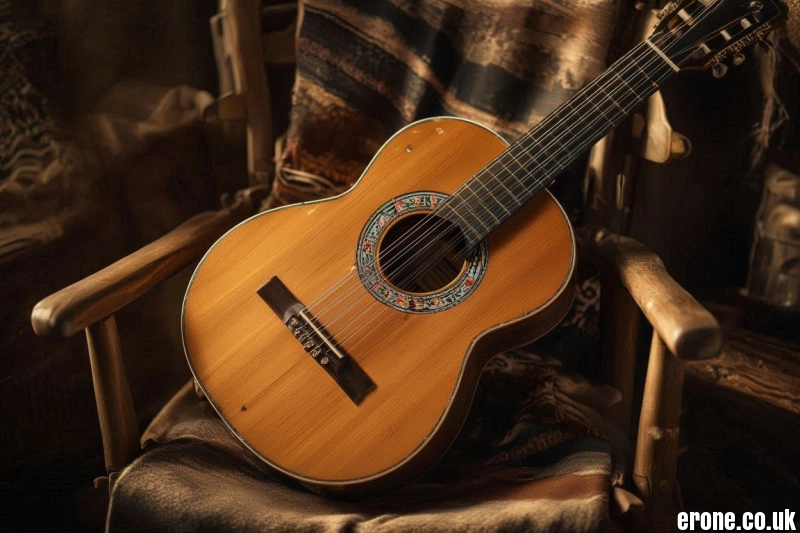
A docerola (also written as guitarra docerola) is the popular Mexican term for a 12-string acoustic guitar. The name comes from the Spanish word “doce,” meaning twelve, referring to the instrument’s twelve strings arranged in pairs. In 2026, the docerola has gained massive popularity, especially in regional Mexican music genres like corridos tumbados, norteño, and corridos bélicos.
While technically the same as a standard 12-string guitar, the term docerola carries cultural significance and is strongly associated with the modern Latin music scene.
Structure and Design of a Docerola
12 Strings in 6 Courses
The defining feature of a docerola is its 12-string configuration, organized into 6 pairs (courses):
-
The lower four pairs (E, A, D, G) are tuned in octaves
-
The higher two pairs (B and high E) are tuned in unison
This setup produces a full, layered sound that is richer than a standard guitar.
Reinforced Build for Durability
Due to the extra tension from 12 strings, most docerolas feature:
-
Reinforced bridges (puente reforzado)
-
Stronger neck construction
-
Durable body designs
These enhancements prevent issues like warping or bridge lifting, which are common in lower-quality models.
Unique Sound and Playing Experience
Rich and Chorus-Like Tone
One of the biggest reasons for the docerola’s popularity is its distinctive sound. The paired strings create a natural chorus effect, making the tone:
-
Brighter
-
Fuller
-
More resonant
This sound is ideal for rhythmic strumming and melodic riffs.
Is It Harder to Play?
Compared to a 6-string guitar, the docerola can be:
-
Slightly harder due to higher string tension
-
More demanding on the fingers
-
Wider at the neck
However, many musicians find it forgiving for rhythm playing, as the fuller sound masks minor mistakes.
Docerola in Modern Mexican Music
Essential in Corridos Tumbados
In 2025–2026, the docerola has become a signature instrument in:
-
Corridos tumbados
-
Corridos bélicos
-
Regional Mexican pop
Artists influenced by stars like Peso Pluma and Natanael Cano frequently use the docerola to achieve that iconic shimmering sound.
Social Media Popularity
Platforms like YouTube, TikTok, and Instagram have boosted its fame. Common content includes:
-
Tutorials (“cómo tocar docerola”)
-
Gear reviews
-
Performance clips
This exposure has made the docerola a global trend, not just limited to Mexico.
Popular Docerola Brands and Models
Affordable to High-End Options
There are many brands producing docerolas, ranging from budget to premium:
-
Bamboo – लोकप्रिय for affordable, reinforced models
-
D’Luca Paracho – handcrafted Mexican guitars
-
Yamaha (FG series) – reliable international option
-
Fender – well-known global brand
-
Pasaye – high-end custom instruments
Comparison Table
| Feature | Standard Guitar | Docerola |
|---|---|---|
| Strings | 6 | 12 (paired) |
| Sound | Clear | Rich & chorus-like |
| Difficulty | Easier | Moderate |
| Use | General | Corridos & regional music |
| Price | Lower | Slightly higher |
Where to Buy a Docerola in 2026
Online and Local Options
Docerolas are widely available both locally and online. Popular marketplaces include:
-
Amazon and eBay
-
Mercado Libre (Mexico)
-
Specialized music stores
Many sellers now offer international shipping, making it easier for global musicians to access these instruments.
Buying Tips
When purchasing a docerola, consider:
-
String gauge (lighter strings are easier to play)
Choosing a well-built instrument ensures better sound and longevity.
Conclusion: Why the Docerola Is Trending in 2026
The docerola is more than just a 12-string guitar—it’s a symbol of modern Latin music culture. Its rich sound, cultural identity, and growing global popularity have made it a must-have instrument for musicians exploring regional Mexican styles.
Whether you’re a beginner or an experienced guitarist, the docerola offers a unique musical experience that blends tradition with modern trends. As its influence continues to grow, it’s clear that this instrument will remain a key part of the global music scene.
FAQs
1. What is a docerola?
A 12-string acoustic guitar commonly used in Mexican music.
2. Why is it called docerola?
From “doce” (twelve), referring to its 12 strings.
3. Is it harder to play than a normal guitar?
Yes, slightly, due to higher tension and wider neck.
4. What music uses docerola?
Mainly corridos tumbados and regional Mexican genres.
5. Can beginners use a docerola?
Yes, but starting with a 6-string guitar is recommended.