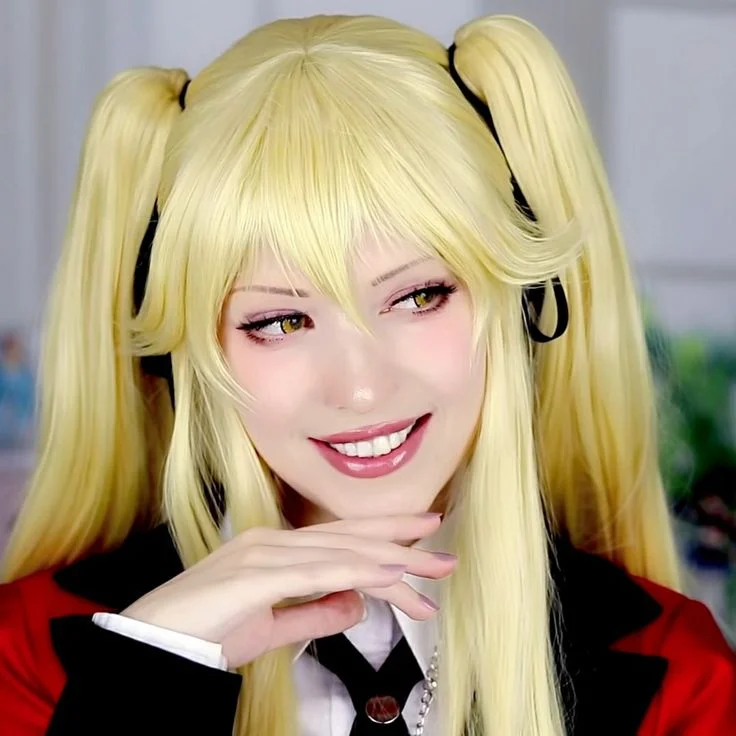
The name Santorimary refers to Mary Santori, a Brazilian cosplayer who unexpectedly gained widespread internet attention after a costume photo of her went viral. She confirmed her identity by reposting a second image of herself in the same outfit, effectively verifying that she was the person in the meme.
What Is the Meme about?
The image in question shows Santorimary wearing red face paint over her eyes (cosplaying as the character Kuruminha, a mascot). It became widely circulated under the caption:
“This is what Christopher Columbus saw when he pulled up to America.”
Known as the “What Columbus Saw” meme, this format satirically portrays Columbus as encountering an Indigenous figure—or an attractive person—so that their beauty distracts him amidst his historical “discovery.”
When Did This Go Viral?
The original meme format emerged in October 2024. It gained massive traction when an X (formerly Twitter) user reposted Santorimary’s image in May 2025, accompanying it with the now-famous “pulled up to America” caption. It quickly accumulated hundreds of thousands of likes and was widely shared across social platforms
Where Did It Spread, and What Was the Context?
-
Platform Spread: Initially captured and circulated on X, the meme quickly spilled into Reddit and meme databases like Know Your Meme, where it gained archival entry and cultural commentary.
-
Cultural Resonance: The meme format taps into broader conversations about colonialism, especially through its playful yet loaded historical framing. The juxtaposition of Columbus’s arrival and an idealized figure sparks both humor and discomfort—prompting a reassessment of how historical narratives are shared, joked about, or challenged.
Why Did This Meme Strike a Chord?
-
Visual Impact and Mystery: The striking red face paint and expressive pose made the image immediately meme-worthy. Its ambiguity—identity, intent—piqued curiosity.
-
Historical Irony: Framing “Columbus’s discovery” through a meme bridges contemporary humor with historical critique, allowing the format to serve as both satire and reflection.
-
Personal Confirmation: Santorimary addressed her own meme status by confirming she was the person in the image, giving the meme a real-world anchor that both humanized and legitimized it.
-
Cultural Conversation: The meme prompted discussions about appropriation, colonial trauma, and how visual culture can short-circuit serious conversations about history through humor.
How Did the Meme Evolve and What Were the Reactions?
-
Meme Variants and Edits: After the original surge, creative users produced all sorts of reinterpretations—photoshops, background edits, AI-generated augmentations—letting the image evolve into countless comedic remixes.
-
Discussions Around Identity and Consent: Online discussions questioned Santorimary’s comfort with the meme, whether she had created it intentionally, and how public exposure without privacy expectations can play out.
-
Forum Commentary: On Reddit, some commenters noted her cosplay identity—including that she portrays “Kuruminha” and that her Instagram handle is mimiesquisitinha. Others explored how the meme intersected with humor themes, including questionable ones involving innuendo.
Strategy: How Could Santorimary or Similar Cases Handle Viral Moments?
| Step | Recommended Action |
|---|---|
| 1. Identity Confirmation | Publicly acknowledge if the image is yours—clarifies misinformation and stops speculation. |
| 2. Contextual Explanation | Share background details—what cosplay event it was from, intent behind the image—to help reclaim narrative. |
| 3. Balance Control and Humor | Let playful adaptations continue if comfortable, but push back on versions that feel exploitative or misaligned with personal values. |
| 4. Leverage Platform Mindfully | If following grows, consider respectful engagement—e.g., promoting cosplay work or community projects. |
| 5. Self-Care and Boundaries | Online fame can be stressful; it’s okay to decline interviews or requests if they feel invasive. |
Summary
Santorimary’s digital fame illustrates how a single image—unexpectedly framed—can transform into a cultural moment. It underscores the unpredictable mechanics of virality, the power of narrative frames, and the delicate balance between humor and meaning online.
Through the “What Columbus Saw” meme, Mary Santori became emblematic not just of meme culture, but of how individuals can be swept into internet folklore—sparking reflection on identity, history, and collective humor.