
Home Improvement
What Might “Apex Position Bed” Mean?

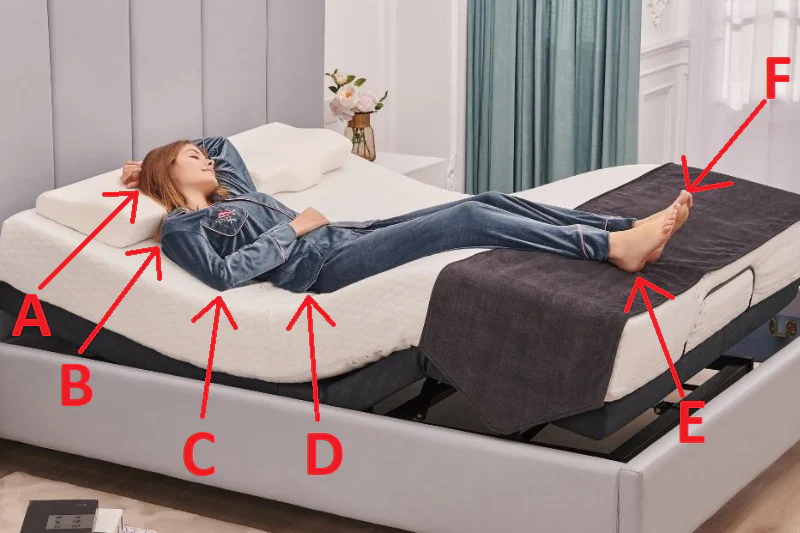
Since “apex position bed” doesn’t seem to be a standard term, here are some possible interpretations based on related terms:
- It could mean a special hospital bed that allows the patient to be positioned in an “apex” pose—the highest or peak angle of elevation (for head, chest, knees, etc.).
- It might refer to a therapeutic bed or mattress system designed to reduce pressure injuries, adjust body posture, or support healing, often called adaptive or positioning beds.
- It could also refer to a bed with features to help with apex placement in medical or surgical contexts (e.g., support surfaces, positioning devices).
In many medical settings, “position bed” is used to describe beds that can be adjusted in height, tilt, flexibility, and support to place patients in therapeutic positions (e.g. Fowler’s position, Trendelenburg position). The “apex” could refer to the most upright or most elevated position of such a bed.
Key Features One Would Expect from an “Apex Position Bed”
If a bed were described as an “apex position bed,” some features it might include are:
Adjustable Angles and Elevation: The ability to raise the head, chest, knees, or entire upper body to steep angles (e.g. 60-90 degrees), possibly even higher or custom tilt.
Stable Support Surface: A mattress or support surface that prevents sliding, maintains patient stability, and supports pressure redistribution.
Pressure-Reducing Mattress or Overlays: Air mattresses, alternating pressure systems, or high-tech foam that helps prevent pressure sores. For example, the Apex Domus 4 mattress is designed for patients at risk of pressure sores with alternating pressure redistribution.
Safe Locks and Controls: Reliable controls for adjusting position, locking mechanisms to avoid unintended motion, safety rails, etc.
Rich Comfort Features: Cushions, bolsters, supports for knees/back, possibly heat or moisture control for skin health.
Ease of Use and Hygiene: Covers that are waterproof, antimicrobial, easy to clean; possibly detachable parts; design that supports caregivers.
Uses & Applications of a Bed with Apex-Positioning Capability
A bed that allows “apex positioning” would be useful in many fields. Some probable applications:
Healthcare Settings / Hospitals
For patients needing respiratory support: elevating the head supports breathing.
Post-surgery recovery: allowing the body to rest in positions that reduce swelling or fluid pooling.
For patients with mobility issues to avoid pressure injuries.
Home Healthcare / Assisted Living
People with limited mobility benefit from adjustable beds to help in sitting up, feeding, or transferring.
For comfort in chronic illness or palliative care—position changes reduce discomfort.
Rehabilitation
Physical therapy where posture or joint angle needs adjustment.
Helping patients maintain or regain mobility, reducing stiffness or contractures.
Preventing Pressure Ulcers (Bed Sores)
Pressure injuries develop when skin is compressed for long periods. Beds that allow good posture, pressure redistribution, and frequent repositioning help. The Apex Domus 4 mattress is designed for that.
Ergonomic / Comfort Beds
Even outside strict medical use, some adjustable beds for homes allow users to elevate head or legs for comfort, reading, or watching TV. If someone calls such a bed an “apex position bed,” they might mean one with maximum range of adjustability.
Benefits of Using Beds with this Positioning Flexibility
Beds with apex or high positioning features bring several benefits:
Improved Respiratory Function: Elevating the upper body helps lung expansion, reduces risk of aspiration, and supports better breathing in many conditions.
Pain Relief and Comfort: Adjusting position can relieve pressure points on joints, back, and hips; helps with back pain, acid reflux, or circulation.
Enhanced Circulation & Reduced Swelling: Elevating legs or head can help with edema and venous return.
Prevention of Pressure Ulcers: Frequent repositioning and ability to tilt or incline helps reduce prolonged pressure on vulnerable areas. Beds with specialized mattresses (such as those from Apex Medical) support this
Independence and Dignity: For patients who can control their bed position, elevation helps with daily tasks: eating, reading, sitting up, going to the bathroom.
Adaptability to Care Needs: Different conditions require different postures. A bed with full adjustability can support many therapeutic positions.
Risks, Challenges & Considerations
While having flexible positioning beds is very beneficial, there are important considerations:
- Cost: Beds with motorized mechanisms, pressure redistribution mattresses, and safety features are expensive both to purchase and maintain.
- Power & Maintenance: Motorized beds need reliable power, periodic maintenance. Mattress covers and air bladders may require replacement.
- Risk of Misuse: If positions are misapplied—e.g. too steep an incline for someone with cardiovascular risk, or wrong support—it may increase discomfort or risk (slipping, circulation issues).
- Skin Shear & Friction: Elevating or repositioning improperly can lead to shearing forces on the skin, which can themselves cause injury.
- Patient & Caregiver Training: To use adjusted positions safely, caregivers need to know how to operate the bed, how to lock parts, how to use cushions or pads correctly.
- Space Requirements: Adjustable beds with apex positioning may require more room for the bed frame to move, higher ceilings, etc.
- Hygiene and Cleaning: Complex mechanical beds and air mattress systems often have many surfaces; all need cleaning to prevent infection, especially in medical settings.
How to Choose the Right Apex or Positioning Bed
If someone is looking to get a bed with apex positioning (or maximum inclination & support), here are criteria and questions to consider:
-
Range of Adjustment
-
How many degrees can the bed elevate the head, chest, knees?
-
Does it offer tilt, Trendelenburg, reverse Trendelenburg, etc.?
-
-
Mattress Type
-
Is it a standard foam mattress or a pressure-redistribution type (air, alternating pressure, low-air-loss)?
-
Is there heel relief or sacral pressure relief features?
-
-
Support & Structure
-
Strong frame, rails, locking joints; safety for users.
-
Firmness, ability to avoid bottoming out.
-
-
Comfort & Ergonomics
-
Moisture control, antimicrobial covers.
-
Cushions or bolsters for knees/back.
-
-
Ease of Use & Controls
-
Are controls accessible (bedside remote etc.)?
-
Are adjustment motors quiet and reliable?
-
-
Maintenance & Longevity
-
Parts availability, warranty, operation cost.
-
-
Suitability for Health Condition
-
Consider medical requirements: respiratory, cardiac, dermatologic, mobility, etc.
-
Consult healthcare professionals where relevant.
-
-
Budget & Funding
-
Price vs expected benefits.
-
Whether insurance, grants, or health providers can help with cost if it’s for a medical necessity.
-
Real-World Examples & Related Products
Here are some examples of products or beds/mattresses with features similar to what an “apex position bed” might include:
- Apex Domus 4 Mattress: A medical air mattress designed for patients at risk of pressure sores, with multiple modes including continuous low pressure, alternating pressure, heel relief, etc. Helps in healthcare settings to reduce pressure injuries.
- Pro-Care Optima Air Mattresses by Apex: Designed for high or very high risk patients for pressure injuries, auto-sensing technology, multiple zones, air pressure adjustment.
- Apex Medical Pro-Care Bariatric Dynamic Mattress: For heavier patients (bariatric), with high load capacity and multiple pressure relief modes.
These show how “positioning beds” or mattresses are evolving with features that may align with “apex” positioning: high support, adjustable angles, pressure relief, and comfort.
Conclusion
While the exact term “apex position bed” isn’t well documented in research or product literature, it’s likely meant to describe a bed system capable of high adjustability, particularly to elevate parts of the body to a peak (apex) angle for therapeutic, comfort, or medical benefits.
Beds with such positioning flexibility can deliver major advantages: improved breathing, prevention of pressure sores, enhanced comfort, and greater independence. However, they also bring challenges—cost, training, maintenance, and ensuring usage that doesn’t cause harm.
If you are considering acquiring or recommending an apex-style positioning bed, carefully evaluate the adjustability, mattress type, support, ease of use, and whether it suits the specific health needs. Always consult healthcare professionals when it’s in a medical or care context.
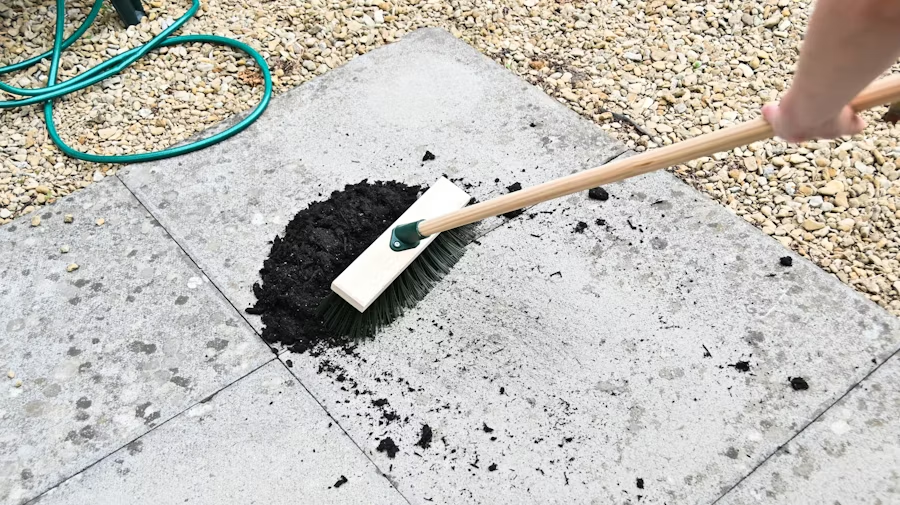
The key to achieving a truly clean outdoor space with domestic cleaning equipment lies in understanding that most spaces are made up of many small messes rather than one large one. When people try to achieve that “cleaner” look, they don’t typically encounter one large mess. Instead, they find themselves battling numerous smaller messes. So whether it’s a little grit here, some damp leaf mulch there, cobwebs under the sills, or dust being carried into joints and edges, the entire area looks tidy at a glance; however, upon closer inspection, it still appears neglected.
While the majority of times achieving that cleaner, sharper appearance doesn’t involve the purchase of heavy-duty commercial cleaning equipment, it will generally come down to applying standard cleaning equipment in the proper order, and making sure to pay attention to the exact locations where dirt accumulates.
Don’t Treat All Surfaces As One Material
One of the biggest mistakes people make when trying to clean their entire outdoor area is treating each and every surface as though they were all part of the same type of material. Therefore, people will sweep the driveway with the same amount of force and motion as they would apply to sweeping the exterior of their wooden deck, the cushions on the outdoor furniture, the exterior of their planter boxes, and the walkway. In reality, this method usually results in spreading the dirt rather than removing it from the surfaces.
Paving can withstand much tougher approaches than wood decks. Debris (dirt, leaves, etc.) behaves differently based on the surface beneath it. Paved surfaces accumulate debris on top of them until the wind blows it into the cracks. Wood decks accumulate debris within the gaps between the boards and hold moisture. Painted Masonry accumulates fine dust on its surface and will appear dull before appearing dirty.
This is where an electric leaf blower becomes an asset. Not because it will magically clean your entire outdoor space, but because it allows you to blow loose debris from your paved surfaces and into your yard, thereby allowing you to focus on the debris accumulated on your decks, benches, etc., that requires more care when cleaning. An electric leaf blower used correctly can help clear the driveway, dislodge debris from decking groove(s), push debris away from doorways and thresholds, and expose the debris accumulation areas requiring washing or scrubbing.
Cleaning Dry Conditions Before Wet Can Save Time Down the Road
Many individuals immediately reach for water since it is perceived as the strongest cleaning agent available. However, if your area has been accumulating dry leaves, dust, seeds, bark pieces, etc., wet cleaning can be more labour-intensive than necessary.
If you hose a patio before removing all dry debris, it causes that debris to become embedded into the stones. Similarly, if you wet debris and then blow it into the gaps of your wood deck, that debris will cause damage once it dries and create stains.
Removing visible dry debris first is a faster process than attempting to clean a wet surface. Since debris such as dry leaves and twigs is easily removed with an electric blower, this can save considerable time in other areas, such as blowing debris out of tight spaces, such as between a fence and house, or near baseboards and walls. Furthermore, an electric blower can assist in removing fine particles that are difficult to remove with a stiff-bristle broom.
Edges and Corners Are Where Dirt Accumulates
Most people clean a mid-point area of their outdoor space and assume that the surrounding areas are sufficiently cleaned. Outside areas do not develop dirt uniformly. Wind pushes debris into crevices. Rain transports sediment towards lower points. Pots containing plants create pockets where leaves collect and decompose. Legs on furniture trap webs of dust and cobwebs in areas you may not notice unless you move the furniture.
For example, a driveway can appear acceptable until you examine the line against the curb or the wall. Similarly, a deck may appear clean until you view it between the boards or under a bench.
Ordinary household tools can adequately address these areas if you simply slow down and use them purposefully. A blower is effective in reaching into confined areas such as those created by joints and recesses without requiring you to pull everything out at one time. Following the removal of loose materials, identifying remaining marks will be easier. Depending on the mark, some will require scrubbing while others will require rinsing. In addition, some marks will only require a cloth and some patience.
Applying Equipment in the Correct Sequence Improves Results with Average Equipment
Too often, we attribute issues with our cleaning equipment to the quality or strength of the equipment itself. Individuals who believe their household cleaning equipment is not strong enough continue purchasing higher-strength cleaning products, larger brushes or additional attachments that inevitably end up in their shed after limited use. Much more often than not, the sequence of operations accounts for our lack of success.
Household cleaning equipment can accomplish far more than people often give it credit for. A suitable broom, stiff brush, garden hose with a consistent water flow rate, a cloth for spot cleaning purposes, and an electric leaf blower can accomplish an enormous amount with regard to maintaining an outdoor living space. Ultimately, how well something is cleaned is dependent more on recognising how the mess has developed and cleaning accordingly, rather than relying on excessive amounts of energy or pressure.

Via Unsplash
Light Maintenance Will Produce Cleaner Outdoor Spaces Than Periodic Big Cleans
Some of the toughest outside cleaning jobs occur after extended periods of neglecting an area’s maintenance. At this point, leaves have begun to soften and darken in corner crevices, the driveway develops a dull greyish coating, and foot traffic produces a coarse texture on the deck surfaces. This type of cleaning project usually takes several hours to complete – a duration that leads people to put off similar tasks in the future.
Cleaning an area regularly, using short intervals (10-15 minutes), removes debris from surfaces before it develops into stubborn residue that requires intense cleaning efforts later. Seasonal accumulation of leaves, blossoms, dust, and seed litter creates an ideal environment for regular short-term maintenance sessions.
Ultimately, what makes an outdoor space feel clean is not perfection. Rather, it is primarily about eliminating that neglected layer of dirt that continues to settle as long as nobody addresses the small details.
Much of outdoor cleaning becomes simpler once people stop waiting for their messes to look catastrophic enough to warrant cleaning efforts. Clean your outside spaces while they remain dry and loose enough to clean easily. Use ordinary household cleaning equipment successfully. Focus on addressing those hard-to-clean areas. These types of actions will often allow you to go from having a reasonably neat-looking space to having a thoroughly cleaned space.
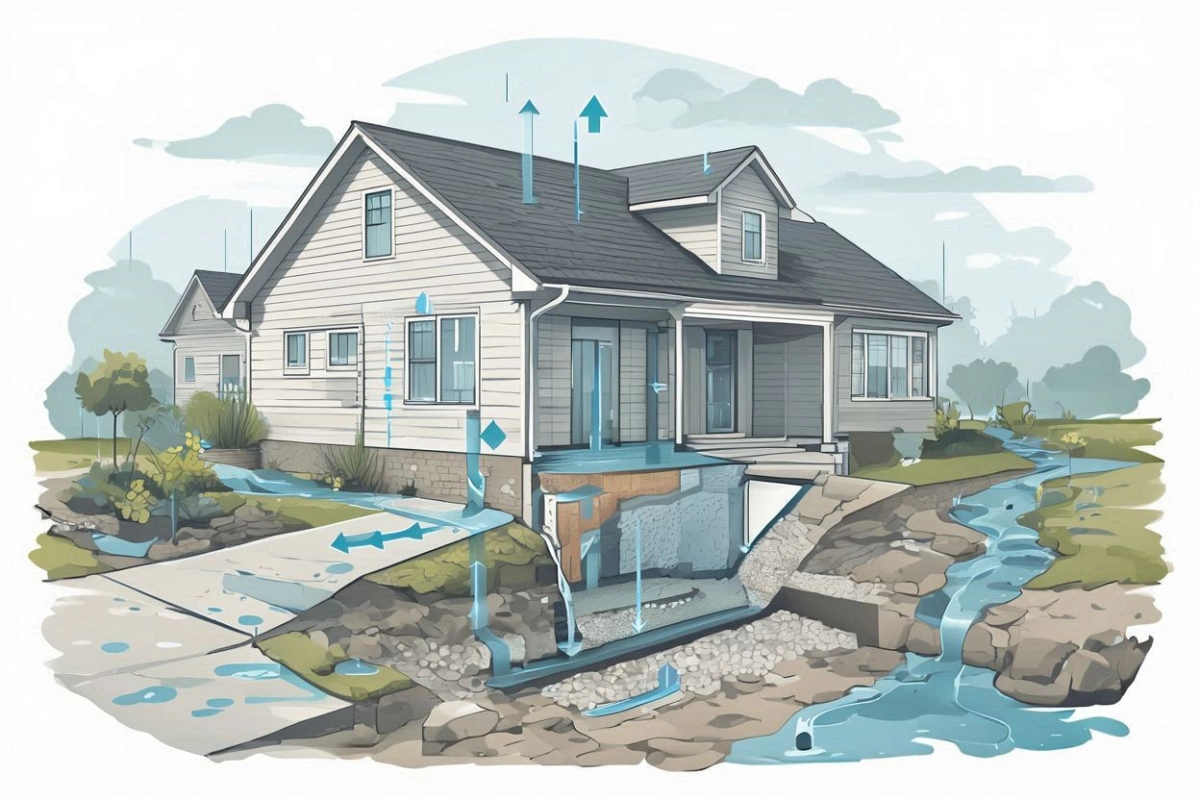
Water is vital for life but can cause serious damage to your home if not managed properly, leading to issues like flooding, mold, and structural instability. Preventing water-related damage requires understanding how water moves around your property and taking proactive steps. This guide explains water runoff, highlights vulnerable areas, and offers strategies to protect your home.
Understanding Water Runoff: Nature’s Relentless Flow
Water runoff occurs when precipitation exceeds the ground’s ability to absorb it, causing excess water to flow across surfaces rather than soaking into the soil. This process follows the path of least resistance, seeking the lowest available point—which, unfortunately, is often your home’s foundation.
Several factors influence how water behaves on your property. Soil composition plays a crucial role: clay soils absorb water slowly, creating more surface runoff, while sandy soils drain quickly but may not provide adequate filtration. The slope of your land, known as the grade, determines where water naturally flows. Even seemingly flat areas have subtle variations that direct water movement.
Weather patterns intensify these challenges. Heavy rainfall can overwhelm even well-designed drainage systems, while freeze-thaw cycles can create ice dams and shift soil composition. Urban development compounds the problem by replacing permeable surfaces with concrete and asphalt, increasing the volume of runoff that must be managed.
Key Areas of Concern: Your Home’s Vulnerable Points
Roofs and Gutters
Your roof serves as the first line of defense against water intrusion, but it also creates one of your property’s largest water collection surfaces. A typical 2,000-square-foot roof can collect over 1,200 gallons of water from just one inch of rainfall. This massive volume must be efficiently channeled away from your home’s structure.
Gutters and downspouts form your roof’s water evacuation system. When functioning properly, they direct water away from your foundation, preventing erosion and basement flooding. However, clogged gutters can cause water to overflow and pool around your home’s perimeter, creating hydrostatic pressure against foundation walls.
Landscaping and Grading
The way water moves across your yard directly impacts your home’s vulnerability to water damage. Proper grading ensures water flows away from your foundation rather than toward it. The general rule calls for a slope of at least six inches over the first ten feet from your foundation, but many properties lack adequate grading.
Landscaping choices also affect water management. While plants can help absorb excess moisture, certain landscaping features may inadvertently direct water toward your home. Gardens, walkways, and decorative features can create barriers that alter natural water flow patterns.
Foundation and Basement Areas
Your foundation bears the brunt of poor water management. Hydrostatic pressure from water-saturated soil can force moisture through foundation walls, leading to basement flooding and structural damage. Even minor foundation cracks can allow significant water intrusion during heavy rainfall or snowmelt.
Basement areas are particularly vulnerable because they sit below ground level, making them natural collection points for groundwater. Without proper waterproofing and drainage, basements can experience chronic moisture problems that lead to mold growth, wood rot, and damaged belongings.
Effective Strategies: Building Your Water Defense System
Gutter Maintenance and Upgrades
Regular gutter cleaning forms the foundation of effective water management. Remove leaves, debris, and sediment at least twice yearly, and inspect for proper alignment and secure mounting. Consider installing gutter guards to reduce maintenance requirements while ensuring consistent water flow.
Downspout extensions are crucial for directing water away from your foundation. Extend downspouts at least six feet from your home, or consider underground drainage systems for a more permanent solution. Splash blocks and rain chains can also help manage water flow while adding aesthetic appeal to your property.
Landscape Grading Solutions
Correcting improper grading may require professional assessment, but many improvements can be accomplished with basic tools and materials. Add soil around your foundation to create the recommended slope, ensuring water flows away from your home. Use clay-rich soil for areas requiring water resistance, and topsoil for planting areas.
French drains offer an elegant solution for properties with challenging drainage issues. These underground channels collect and redirect water using perforated pipes surrounded by gravel. While installation requires some excavation, French drains provide long-term water management that’s virtually invisible once completed.
Foundation Sealing and Waterproofing
Foundation waterproofing involves both exterior and interior approaches. Exterior waterproofing includes applying waterproof coatings to foundation walls and installing drainage systems around the foundation perimeter. Interior approaches focus on managing moisture that does penetrate, using sump pumps, dehumidifiers, and vapor barriers.
Crack repair should be addressed immediately, regardless of size. Small cracks can expand rapidly during freeze-thaw cycles, allowing increasing amounts of water intrusion. Use appropriate sealants for your foundation material, and consider professional assessment for significant cracks or recurring moisture issues.
Roofing Solutions: Protecting from Above
Your roof’s condition directly affects your entire water management system. Regular inspections can identify potential problems before they lead to significant water damage. Look for damaged, missing, or aging shingles that may allow water penetration. Check flashing around chimneys, vents, and roof valleys where water tends to concentrate.
For homes experiencing recurring roof issues or significant aging, comprehensive roof replacements like those offered in Tooele can provide long-term protection against water intrusion. Modern roofing materials offer improved water resistance and durability compared to older options.
Consider upgrades that enhance water management, such as improved attic ventilation to prevent ice dam formation, or impact-resistant materials in areas prone to severe weather. These investments provide both immediate protection and long-term value for your property.
DIY vs. Professional Help: Making the Right Choice
Many water management tasks can be handled by capable homeowners with basic tools and knowledge. Gutter cleaning, minor grading adjustments, and simple foundation crack repairs fall within the DIY category. These regular maintenance tasks help prevent more serious problems while keeping costs manageable.
However, certain situations require professional expertise. Significant grading changes, French drain installation, and foundation waterproofing involve specialized knowledge and equipment. Professional assessment becomes crucial when dealing with recurring water problems, structural concerns, or projects requiring permits.
Consider the long-term implications of your choices. While DIY approaches may seem cost-effective initially, improper installation can lead to more expensive repairs later. Professional work typically includes warranties and guarantees that protect your investment.
Conclusion
Protect your home with effective water management by cleaning gutters, maintaining proper grading, and caring for the foundation. Consider advanced solutions like drainage systems or waterproofing, and prioritize regular maintenance to keep your home safe year-round.
Luxury Vacation Rental Guidebook Criteria: The demand for luxury vacation rentals has skyrocketed in 2026, with travelers expecting more than just a beautiful space. Today’s high-end guests want personalized experiences, premium comfort, and hotel-level service—all within a private setting. That’s where a well-crafted luxury vacation rental guidebook becomes essential.
This guide explains the key criteria that define a true luxury rental and how hosts can meet (or exceed) modern expectations.
What Defines a True Luxury Vacation Rental?
A luxury vacation rental is not just about price or appearance—it’s about delivering a complete experience. Guests expect a seamless blend of design, comfort, service, and exclusivity.
Key Elements of Luxury
- Privacy and exclusivity
- High-end design and architecture
- Five-star amenities
- Personalized guest services
In 2026, luxury is increasingly defined by attention to detail. Even small touches—like a handwritten welcome note or curated local recommendations—can elevate a stay from good to unforgettable.
Prime Location & Architectural Excellence
Location is the foundation of any high-end vacation rental. The most desirable properties are situated in exclusive or scenic areas, such as beachfronts, mountain retreats, or city penthouses.
Location Criteria
- Stunning views (oceanfront, skyline, or nature-based)
- Easy access to attractions and dining
- Quiet, private surroundings
Design & Interior Standards
Luxury homes must feature:
- Professional interior design with cohesive themes
- High-quality materials (marble, hardwood, stone)
- Open layouts with indoor-outdoor flow
A truly premium property feels unique and memorable, not mass-produced.
Premium Amenities Guests Expect
Modern travelers expect hotel-level amenities—and more.
Essential Luxury Amenities
- Gourmet kitchen with high-end appliances
- Spa-style bathrooms with premium toiletries
- Private pool, hot tub, or outdoor lounge
- High-speed Wi-Fi and smart TVs
Advanced Features (H3)
- Smart home systems (keyless entry, lighting control)
- Home theater or entertainment rooms
- Fitness or wellness spaces
These features are no longer optional—they are part of the baseline expectation for luxury rentals in 2026.
Guest Comfort & Experience Standards
Comfort is where luxury truly shines. A property might look stunning, but if it lacks comfort, it fails the luxury test.
Comfort Essentials
- Hotel-quality bedding and linens
- Climate control and blackout curtains
- Spotless cleanliness and maintenance
Guidebook Importance (H3)
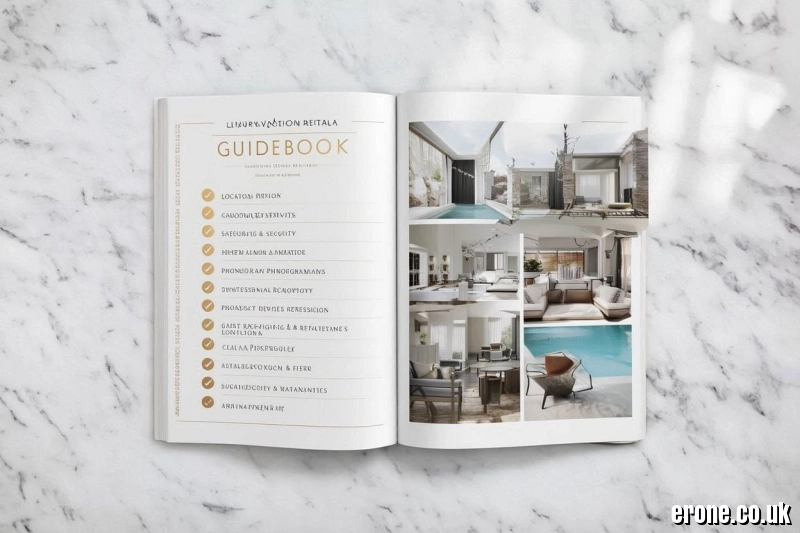
A digital or printed guidebook should include:
- Check-in/check-out instructions
- Wi-Fi details
- Appliance usage guides
- Local recommendations
A well-designed guidebook reduces confusion and enhances the overall guest experience.
Service & Personalization Criteria
Luxury today is driven by personalized service. Guests expect hosts to anticipate their needs.
Service Expectations
- 24/7 responsive communication
- Concierge services (chef, transport, tours)
- Customized experiences
Personal Touch (H3)
Examples include:
- Welcome baskets
- Pre-stocked groceries
- Personalized itineraries
The goal is to create a stay that feels tailored, effortless, and exclusive.
Operational Standards & 2026 Trends
Behind every great luxury rental is strong management and transparency.
Operational Must-Haves
- Clear pricing (no hidden fees)
- Safety features (smoke detectors, secure locks)
- Accurate listings and high-quality photos
2026 Luxury Trends (H3)
- Eco-friendly features (energy-efficient systems)
- Remote work setups (dedicated workspace, fast internet)
- Family- and pet-friendly options
Sustainability and flexibility are becoming key decision factors for modern travelers.
Conclusion
Creating or choosing a luxury vacation rental in 2026 requires more than aesthetics—it demands a holistic experience. From prime location and premium amenities to personalized service and a detailed guidebook, every element must work together seamlessly.
For hosts, following this luxury vacation rental guidebook criteria ensures higher guest satisfaction, better reviews, and increased bookings. For guests, it provides a clear framework to identify truly exceptional properties.
FAQs About Luxury Vacation Rental Guidebook Criteria
1. What is a luxury vacation rental guidebook?
A guidebook is a resource (digital or printed) that provides guests with property details, instructions, and local recommendations.
2. What makes a rental “luxury”?
It includes premium amenities, high-end design, privacy, and personalized service.
3. Are smart home features important in 2026?
Yes, smart technology is now a standard expectation in luxury rentals.
4. Why is personalization important?
It creates a unique and memorable guest experience, leading to better reviews.
5. How can hosts improve their luxury rental?
Focus on quality design, excellent service, and a detailed guidebook.


HUAWEI gt 7: Smart Training for Every Outdoor Adventure

The Tech in Your Home is More Advanced Than You Think – Does It Truly Preserve Your Valuables?
