Technology
Full Diagnostic Scanner That Also Works With Volvo

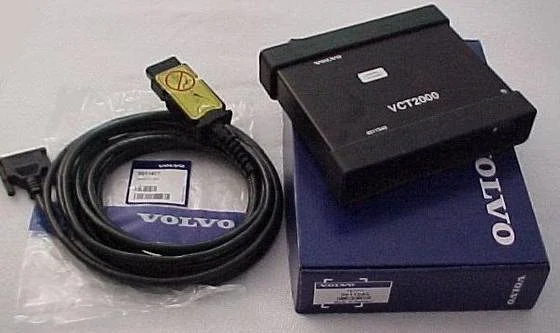
What Is a Full Diagnostic Scanner (and Why Volvo Needs Something Special)
Full Diagnostic Scanner That Also Works With Volvo: A full diagnostic scanner (often called a “full-system scanner” or “all-module scanner”) goes far beyond a basic OBD-II code reader. Rather than just reading engine fault codes, it can:
-
Access all vehicle control modules (engine, transmission, ABS, SRS/airbags, body control, climate, infotainment, etc.)
-
Run active tests / bi-directional commands, like actuating valves, motors, or relays
-
Perform special service resets (e.g. oil reset, EPB/electronic parking brake reset, DPF regeneration, battery registration)
-
Read live data and graphs from sensors
-
Generate diagnostic reports and logs
Volvo vehicles, especially newer models, often use proprietary or semi-proprietary systems, gateway modules, secure access to certain modules, and brand-specific error codes. A generic scanner may only read standard engine codes, but not the unique Volvo systems. As many Volvo owners discuss online:
“Normal OBD can grab generic codes, but some codes are Volvo exclusive and you’ll need VIDA and a compatible reader for those.”
Thus, to truly diagnose Volvo systems fully, your scanner needs deeper support (or access to Volvo’s OEM software). A “full diagnostic scanner that works with Volvo” means one that supports Volvo’s module set, possibly with Volvo-specific protocol codes.
Key Features to Look for in a Volvo-Compatible Full Diagnostic Scanner
If you want a scanner that works well with Volvo (now and future models), here are must-have features:
1. Comprehensive Module Coverage & Protocol Support
Your scanner should support all major systems — namely Powertrain (engine, transmission), ABS, Airbags/SRS, Body & Chassis, HVAC, Instrument Cluster, BCM, etc. Also, it should cover Volvo’s proprietary protocols or gateway systems for newer models.
2. Bi-Directional / Active Test Capability
A powerful scanner must allow you to send commands to the vehicle (e.g. open/close valves, retract EPB, cycle injectors). This is often called bi-directional control.
3. Special Functions / Service Resets
Things like oil service reset, electronic parking brake (EPB), DPF regen, battery registration (BMS), steering angle sensor (SAS) calibration, throttle adaptation, etc. These are critical for maintenance beyond fault code reading.
4. Live Data, Graphing, Logging & Reports
You want the ability to view live sensor values, display them graphically, record sessions, export reports (PDF) — all essential for tracking issues over time.
5. Software Updates (Free or Paid)
Volvo introduces new models and modules every year. The scanner must have ongoing software updates to support new modules. Ideally, lifetime free updates are a bonus.
6. Vehicle Identification & Auto VIN Recognition
To save time and prevent errors, the scanner should auto-identify the vehicle via VIN or let you input make/model/year easily.
7. Secure / Gateway Access / Authentication Support
Some newer Volvos have security gateways or module locks that require special authentication or login to access. Your scanner must either bypass or support those schemes.
8. Good Hardware & Connectivity
Solid build, good processor, responsive interface, and options like Bluetooth, WiFi, or wired connection to a tablet/laptop/phone.
Popular Full Diagnostic Scanners That Support Volvo
Here are several scanners (or scanner + software combos) known to work well with Volvo and provide near full system access:
| Scanner / Tool | Volvo Support Highlights | Pros / Weaknesses |
|---|---|---|
| ANCEL VOD700 | It is marketed as a full system OBD2 scanner for Volvo, with all module support (engine, ABS, SRS, transmission, etc.), plus resets for EPB, oil, BMS, etc. | Good mid-level choice. May lack advanced OEM features for very new Volvo models. |
| XTOOL A30M | The A30M claims OE-level full-system diagnostics, bi-directional tests, and supports Volvo among many brands. | Strong candidate: lifetime free updates, active tests, broad coverage. |
| iCarSoft Volvo / Saab Tool | Many Volvo owners choose brand-specific tools like iCarSoft’s Volvo scanner, which support Volvo ABS, SRS, and some advanced codes. | More limited in system scope compared to universal scanners, but cost effective. |
| Launch / Autel / Foxwell / Professional Scanners + Volvo Software | High-end scanners (e.g. Launch, Autel, etc.) combined with Volvo module software can often support deep module access, especially if they support gateway or security authentication. | These tend to be expensive or require additional module unlocking. |
| Volvo OEM / VIDA + DiCE Setup | The official Volvo software, VIDA, used by dealerships. When used with compatible DiCE interfaces (or clones), this provides full OEM-level control over all modules. | Best option for complete access, but expensive and sometimes tricky to license. |
From user forums:
-
Some say lower-cost generic scanners struggle on post-2017 Volvos due to gateway restrictions.
-
Others say that they pair a laptop + software (VIDA / aftermarket) with a compatible interface to get full module access.
So balancing price vs depth is key.
How to Use a Full Diagnostic Scanner with Volvo (Step-by-Step Guide)
To help you get the most from a full scanner on your Volvo, here’s a general workflow:
1. Prepare the Vehicle & Tools
-
Ensure battery is charged (some modules will fail mid-scan if voltage drops)
-
Locate the OBD port (under the dash, left side)
-
Connect your scanner or interface device (wired, Bluetooth, etc.)
-
If using software (VIDA / apps), launch it and ensure it’s updated
2. Vehicle Identification / VIN Read
-
Use the scanner’s auto VIN feature or manually input make/model/year
-
The scanner should fetch the correct modules list
3. Scan / Read Fault Codes Across All Modules
-
Choose “Full System Scan” or “All Modules”
-
Read stored and pending Diagnostic Trouble Codes (DTCs) from each module
-
Note freeze frame data and module statuses
4. Interpret & Cross-Check Codes
-
Use the scanner’s internal description or cross-reference OEM code lists
-
Compare symptoms to the codes (don’t blindly clear)
-
Use live data (temperatures, pressures, flow rates) to confirm
5. Run Active / Bi-Directional Tests & Actuator Commands
-
Where supported, test valves, relays, injectors, fans, solenoids
-
Cycle key components (e.g. open/close EGR valve, move throttle body)
-
This helps you validate whether a part is working or not
6. Perform Special Service Functions / Resets
-
After repairing or replacing parts, perform resets: oil light reset, EPB reset, battery registration, DPF regeneration, etc.
-
Use adaptation or calibration functions like steering sensor (SAS) or throttle adaptation
7. Clear Codes & Re-Scan
-
Clear codes (only after confirming proper repairs)
-
Reboot modules / ignition cycle, then re-scan to ensure codes do not reappear
8. Log & Report
-
Save diagnostic sessions or export reports (PDF, CSV)
-
Record before/after readings and module statuses for future reference
Each scanner tool will have its own UI and menu flow, so always refer to tool documentation for precise steps.
Challenges, Pitfalls & Tips for Diagnosing Volvo Vehicles
While full diagnostic scanners are powerful, working with Volvo systems comes with unique challenges:
Gateway / Security Module Access
Modern Volvo models often use a gateway control module restricting access to certain subsystem modules. For full access, the scanner must support that gateway, sometimes requiring security or login credentials.
Module Updates / Locked Modules
Some modules may be locked, only allowing read or limited write access unless software unlocks. For very new modules, scanner updates may lag.
Firmware / Software Version Compatibility
Volvo may release new protocol versions; if your scanner’s software is outdated, it may fail to communicate with newer ECUs.
Voltage Drop / Power Problems During Scan
During deep diagnostics and active tests, voltage may drop. Always maintain good battery voltage to avoid module resets or failures.
Clear Codes Prematurely – Mistake
Never clear codes before verifying root cause. Clearing too early can hide intermittent issues and make diagnosis harder.
Using Cloned / Unauthorized Interfaces (VIDA clones, etc.)
Some users use unofficial VIDA + clone interfaces. While they can work, they carry risks: software instability, module damage, or license issues.
Interpreting Data vs Reading Descriptions
Scanner descriptions are generic or simplistic; always cross-check with Volvo OEM documentation, tech bulletins, or forums.
Conclusion & Recommendations
If you own a Volvo and want a full diagnostic scanner, aim for one that offers broad module coverage, bi-directional tests, special service resets, live data/graphing, and regular software updates. Tools like the ANCEL VOD700 and XTOOL A30M are solid picks, especially for independent shops or DIYers. For full OEM access, VIDA + DiCE (or compatible interface) remains the gold standard.
Before purchasing, check your specific Volvo model/year and see if the scanner lists support for it. Also, verify if users of that same model have successfully used the tool (via forums, reviews). Once you have the scanner, use it carefully — scan first, test, repair, then reset, and always back up your diagnostic logs.
Technology
How Container Tracking Platforms Help Logistics Teams Save Time, Reduce Delays, and Improve Supply Chain Visibility
Global supply chains have become increasingly complex over the past few years. Events such as disruptions in the Red Sea, geopolitical tensions affecting the Strait of Hormuz, port congestion, labor shortages, and shifting trade routes have made international transportation less predictable than ever before.
At the same time, customer expectations have changed. Businesses no longer accept waiting days for shipment updates, and customers expect accurate delivery information throughout the transportation process. Whether a company is importing raw materials, exporting finished products, or coordinating inventory across multiple countries, shipment visibility has become a critical operational requirement.
The challenge is that modern supply chains involve multiple stakeholders. A single shipment may pass through several ports, ocean carriers, terminals, customs authorities, warehouses, and trucking providers before reaching its destination. Monitoring every stage manually can quickly become overwhelming.
As a result, logistics teams increasingly rely on digital visibility platforms that provide real-time shipment information from multiple sources. These technologies help businesses track cargo movements, identify potential delays earlier, automate routine monitoring tasks, and improve decision-making across the supply chain.
What Is Container Tracking?
Container tracking is the process of monitoring the location and status of cargo as it moves through global transportation networks.
Traditionally, shipments were tracked using information provided directly by transportation companies. Today, modern tracking platforms allow users to monitor shipments using a container number, booking number, or bill of lading (a shipping document used to identify cargo).
Tracking information can cover every stage of transportation, including:
- Departure from origin ports
- Vessel movements across oceans
- Transshipment operations
- Terminal handling activities
- Customs clearance milestones
- Inland transportation updates
- Final delivery status
Modern tracking platforms provide far more than simple location data. Advanced systems typically include:
- Real-time shipment updates
- Estimated Time of Arrival (ETA) predictions
- Delay notifications
- Route visualization
- Historical shipment records
- Exception monitoring
- Performance analytics
In other words, container tracking has evolved from a basic tracking function into a source of operational intelligence that helps organizations make faster and more informed decisions.
The Challenges of Traditional Shipment Monitoring
Before adopting modern tracking platforms, many logistics teams rely on manual processes that consume significant amounts of time and create operational inefficiencies.
Manual Carrier Checks
One of the most common challenges involves checking shipment status across multiple carrier websites.
A logistics coordinator may need to:
- Open several carrier portals
- Enter container numbers individually
- Review shipment milestones
- Compare updates from different sources
- Copy information into internal systems
When managing dozens or hundreds of shipments simultaneously, these tasks become highly repetitive.
Spreadsheet-Based Tracking
Many organizations continue to manage shipments using spreadsheets.
While spreadsheets are flexible, they introduce several limitations:
- Manual data entry requirements
- Delayed status updates
- Version-control issues
- Increased risk of human error
- Difficulty collaborating across teams
As shipment volumes grow, spreadsheets become increasingly difficult to maintain.
Reactive Decision-Making
Perhaps the biggest challenge is that delays are often discovered too late.
Without automated monitoring, logistics teams may learn about disruptions only after customers begin asking questions or inventory shortages start affecting operations.
This reactive approach reduces the time available to:
- Adjust transportation plans
- Reschedule warehouse activities
- Notify customers
- Allocate alternative inventory
The result is higher operational risk and reduced supply chain agility.
How Modern Container Tracking Platforms Work
Modern visibility platforms solve these challenges by collecting and consolidating shipment information from multiple data sources into a single interface.
Data Sources
Today’s tracking systems aggregate information from:
- Ocean carriers
- Port community systems
- Terminal operators
- Vessel tracking networks
- Inland transportation providers
- Customs and logistics databases
Instead of requiring employees to check each source individually, the platform automatically gathers and organizes relevant shipment information.
Centralized Dashboard
The collected data is displayed through a centralized dashboard.
This allows logistics teams to view:
- Active shipments
- Current container status
- Estimated arrival dates
- Delay risks
- Historical shipment activity
Users gain a complete overview of transportation operations without switching between multiple systems.
Automated Updates
One of the most valuable capabilities is automated event monitoring.
The platform continuously monitors shipment activity and automatically refreshes information when new events occur.
Examples include:
- Vessel departure confirmations
- Port arrival notifications
- Terminal release events
- Customs clearance updates
- Route deviations
- Schedule changes
Many platforms also generate exception alerts when delays or disruptions are detected.
Advanced solutions recalculate ETAs dynamically as new information becomes available, providing more accurate arrival forecasts throughout the shipment journey.
Operational Benefits for Logistics Teams
Saving Time Through Automation
Time savings are often one of the first measurable benefits organizations experience.
Consider a logistics coordinator responsible for monitoring 500 active containers each month.
Using a manual process:
- Average status check: 3 minutes
- 500 containers × 3 minutes = 1,500 minutes
- Total monthly monitoring time: approximately 25 hours
With a modern tracking platform:
- Status collection becomes automated
- Alerts highlight only exceptions requiring attention
- Monitoring workload falls to approximately 3–5 hours monthly
This represents a reduction of up to 80% in routine tracking effort.
Those recovered hours can be redirected toward customer support, planning activities, and problem-solving tasks that generate greater business value.
Faster Response to Delays
Transportation disruptions are unavoidable.
Common examples include:
- Vessel schedule changes
- Port congestion
- Customs processing delays
- Transshipment disruptions
- Weather-related incidents
The difference lies in how quickly companies become aware of the problem.
If a five-day delay is detected immediately through automated alerts, logistics teams can:
- Adjust trucking schedules
- Reschedule warehouse labor
- Update inventory forecasts
- Inform customers proactively
Earlier awareness often reduces the operational impact of disruptions significantly.
Reducing Human Error
Manual processes inevitably introduce mistakes.
Common issues include:
- Incorrect container numbers
- Missed shipment updates
- Outdated spreadsheet records
- Duplicate entries
Automated synchronization reduces reliance on manual data entry and improves information consistency across teams.
Greater accuracy leads to better planning decisions and fewer operational surprises.
Improving Team Productivity
Many logistics professionals spend a large portion of their day collecting information rather than acting on it.
Tracking platforms automate repetitive monitoring activities, allowing employees to focus on:
- Exception management
- Customer communication
- Strategic planning
- Supplier coordination
- Transportation optimization
This shift from administrative work to decision-making work can significantly improve overall team productivity.
Real-World Optimization Examples
Example 1: Import Business
An importing company receives approximately 200 containers each month.
Before implementing a visibility platform:
- One employee spends roughly 15 hours weekly monitoring shipments
- Total monthly monitoring workload: approximately 60 hours
After implementation:
- Most shipment updates become automated
- Manual monitoring falls to around 10 hours monthly
Result:
- Approximately 50 hours saved each month
- Faster issue identification
- Greater focus on supplier coordination and inventory planning
Example 2: Freight Forwarder
Freight forwarders frequently receive requests from customers asking for shipment updates.
Without self-service visibility:
- Support teams answer dozens of status inquiries daily
- Significant time is spent gathering shipment information
After implementing a customer-accessible tracking portal:
- Customers can check shipment status independently
- Notifications are generated automatically
Potential outcome:
- Up to 70% fewer shipment status emails and calls
- Reduced support workload
- Faster customer response times
- Improved client satisfaction
Example 3: Retail Supply Chain
A retailer relies on imported inventory to maintain stock availability.
Previously:
- Shipment delays were discovered late
- Warehouse schedules required frequent adjustments
- Stock shortages occurred unexpectedly
After introducing real-time ETA monitoring:
- Delay alerts arrive earlier
- Inventory planning becomes more accurate
- Warehouse operations can prepare proactively
Result:
- Improved inventory availability
- Reduced operational disruptions
- Greater predictability across the supply chain
Key Performance Metrics Improved by Tracking Platforms
| Metric | Traditional Process | With Tracking Platform |
| Time spent monitoring shipments | 20–60 hours/month | 3–10 hours/month |
| Delay detection speed | Hours or days | Near real time |
| ETA accuracy | Moderate | Significantly improved |
| Shipment visibility | Fragmented | Centralized |
| Manual data entry | High | Minimal |
| Customer inquiry volume | High | Reduced significantly |
| Response time to disruptions | Reactive | Proactive |
| Operational efficiency | Limited by manual processes | Improved through automation |
While actual results vary between organizations, the overall trend is consistent: greater visibility leads to faster decisions and more efficient operations.
Beyond Tracking: Additional Features of Modern Visibility Platforms
Container tracking platforms have evolved considerably beyond basic shipment monitoring.
Many modern solutions now provide a broader set of supply chain intelligence capabilities, including:
Route Visualization
Interactive maps help teams understand where shipments are located and how cargo is moving through transportation networks.
Historical Shipment Analytics
Organizations can analyze past shipment performance to identify recurring delays and improve planning decisions.
Carrier Performance Monitoring
Performance metrics help businesses compare transportation providers based on reliability, transit times, and schedule consistency.
Automated Notifications
Users receive alerts when important events occur, reducing the need for manual monitoring.
Multiple Shipment Tracking
Large shipment volumes can be monitored simultaneously through centralized dashboards.
API Integrations
Many platforms connect directly with ERP, CRM, transportation management, and inventory systems, creating a more unified operational environment.
Reporting Dashboards
Executives and operations teams can monitor key logistics performance indicators through visual reporting tools.
Solutions such as TimeToCargo illustrate this evolution by combining container tracking with route visualization, time-based notifications, shipment dashboards, multiple-container monitoring, and API integrations that support broader supply chain workflows.
The industry is clearly moving from simple tracking tools toward comprehensive visibility and intelligence platforms.
Which Businesses Benefit Most?
Importers
Importers depend on predictable arrival schedules to manage inventory levels and maintain business continuity.
Exporters
Exporters require visibility across international transportation routes to coordinate customer deliveries and production planning.
Freight Forwarders
Freight forwarding companies manage large shipment volumes and benefit from centralized monitoring and customer visibility tools.
Manufacturers
Manufacturers often rely on just-in-time supply chains and need accurate arrival forecasts for critical materials.
Retailers
Retail businesses depend on reliable inventory replenishment and benefit from earlier detection of transportation disruptions.
Conclusion
Container tracking is no longer simply a tool for locating cargo.
Modern visibility platforms have become essential operational technologies that help businesses automate routine processes, reduce manual workload, improve decision-making, and respond faster to supply chain disruptions.
By centralizing shipment information, providing real-time updates, and automating exception monitoring, these systems allow logistics teams to save dozens of working hours every month while improving service quality and operational efficiency.
The ability to identify delays earlier, improve ETA accuracy, and reduce customer inquiry volumes creates measurable business value across a wide range of industries.
As global supply chains continue to face uncertainty and increasing complexity, real-time visibility is rapidly becoming a competitive advantage rather than an optional capability.
Organizations that invest in digital logistics technologies today are likely to be better positioned to manage disruptions, improve customer experience, and build more resilient supply chains in the years ahead.
If you’re thinking about domestic or commercial solar panel installation, you should also consider battery storage. Solar battery storage allows you to store electricity generated by your solar panels so you can use it when you need it. Without a battery, any unused energy your system produces is usually sent back to the grid. With battery storage, you keep more of that energy on-site, making your system more efficient and giving you greater control over how and when you use electricity.
How energy is generated and stored
Solar panels generate electricity during daylight hours, with the highest output typically occurring around midday. This energy is produced as direct current (DC) electricity. An inverter then converts it into alternating current (AC), which can be used in your home or business.
If your system generates more electricity than you are using at that moment, the excess energy can be directed into a battery instead of being exported to the grid. The battery stores this electricity so it can be used later, such as in the evening or during periods of low sunlight.
Using stored energy
When your solar panels are not producing enough electricity to meet your needs, the system can draw energy from the battery. This usually happens automatically, without any action required from you. For example, after sunset, your stored energy can power lighting, appliances, or equipment.
If the battery becomes fully discharged, your system will then take electricity from the grid as normal. This ensures that you always have access to power when you need it.
How the system is managed
Solar battery systems are typically managed by a control system that decides when to store energy and when to use it. This process is automated to maximise efficiency. The system will usually prioritise using solar energy first, then stored energy, and finally grid electricity if needed.
Many systems include monitoring tools that allow you to track how much energy you generate, store, and use. This can give you a clearer understanding of your energy habits and help you make more informed decisions about usage.
Charging the battery
The battery is charged using excess solar energy generated during the day. In some cases, it can also be charged using electricity from the grid, for example during off-peak hours when energy is cheaper. This depends on how your system is set up and your specific requirements.
Charging is carefully managed to protect the battery and ensure long-term performance. Modern batteries are designed to handle regular charging and discharging cycles over many years.
Discharging the battery
When energy is needed, the battery releases stored electricity back into your system. This process is known as discharging. It allows you to use your own stored energy instead of purchasing electricity from the grid.
The system will control how quickly the battery discharges based on your energy demand and the available charge. This helps maintain a balance between meeting your needs and preserving the battery’s lifespan.
Improving energy efficiency
By storing excess solar energy, battery systems help you use more of the electricity your panels generate. This reduces the amount of energy you need to import from the grid and can lead to lower energy costs over time.
It also means less energy is exported, which can be beneficial if export rates are lower than the cost of buying electricity. Overall, this improves the efficiency and value of your solar system.
Providing backup power
Some solar battery systems can provide backup power during a power cut. If configured to do so, the battery can supply electricity to selected circuits when the grid is unavailable. This can help maintain essential functions, such as lighting or critical equipment.
Not all systems include this feature, so it is important to consider this when choosing a battery.
Maintenance and lifespan
Solar batteries are designed to be low maintenance. They generally require minimal attention beyond occasional checks to ensure they are operating correctly. Most modern batteries have a lifespan of 10 to 15 years, depending on usage and the type of battery.
Over time, the battery’s storage capacity may gradually decrease, but it will continue to provide value throughout its lifespan.
Conclusion
Solar battery storage works by capturing excess energy generated by your solar panels and making it available for use at a later time. It operates automatically to store and release energy as needed, helping you make better use of renewable power. By adding a battery to your system, you can improve efficiency, reduce reliance on the grid, and gain greater control over your energy use.

The machine shop at 2 AM has a particular sound. It’s not the roar of the daytime, when people are yelling over spindles and forklifts beep their warnings. It’s a hum. A drone of machines at work, slow and steady, nearly meditative, and as they have nothing to watch over, their doors shut, and their lights throwing long blue rectangles on the concrete floor.
I am in the presence of Marcus who is the supervisor of night shift. He has twenty-two years of CNC machine running. A fine gray grime permanently stains his hands, which cannot be removed by soap.
I listen. I hear the machine.
“No,” I admit.
He nods, still listening. “It’s nervous.”
You push it, it’ll chatter. Leave a bad finish. The part passes inspection, maybe, but it’s stressed. It’ll move later, during assembly. The customer won’t know why it doesn’t fit. They’ll blame their design. But it’s not their design. It’s us. It’s me not listening.”
But the machine’s sound shifts, just slightly. The whine evens out. “There,” he says. “Happy now.”
The Silence of the Day Shift
During the day, the shop is a different world. Salespeople are on the phone. Engineers are reviewing files. Project managers are updating spreadsheets. Everyone is busy, moving, talking.
But in the quiet moments, when a day shift machinist finishes a setup and hits the green button, they do the same thing Marcus does. They listen. They watch the chips curl off the tool. They run a finger along the first part, not measuring, just feeling. This is the ritual. It’s not in the quality manual.
The One That Got Away
Every machinist has a story about the one that got away. The part they shipped that came back. Marcus has his.
“Five years ago,” he says, still staring at the now-happy machine. “Medical component. Titanium. I was rushing. We had a deadline, the customer was breathing down my neck. I skipped a finish pass. The part measured fine.
He pauses. The machine hums.
“Six months later, I get a call. The part failed in surgery. Not catastrophic, thank God. But it didn’t perform. The surgeon had to switch to a backup. The patient was under longer than necessary. All because I rushed. All because I didn’t listen.”
He looks at me. Why are you asking me why I am here at 2 AM? Why I am the one who listens to nervous machines? He says because I am the guy who did not hear that day. And I will have to pay my life long to recoup it.
What You’re Actually Paying For
When you send a RFQ to a shop, you’re not just paying for machine time and material. You’re paying for Marcus’s guilt. You’re paying for the night shift rituals. You’re paying for the decades of mistakes that taught someone to hear the difference between a happy machine and a nervous one.
You’re paying for the institutional memory of a thousand tiny failures that never happened to your part because they happened to someone else’s, years ago, and the lesson was absorbed into the fingertips of every machinist in the building.
This is the invisible line item on every invoice. It’s never listed. It’s never discussed. But it’s the most important thing you’re buying.
The Part That Arrives
When your box comes at last, when you reach out and draw out that perfect, shining part, when you feel the edge of your thumb, when you find it sliding across, and you find out that it is not hard at all, but smooth, and solid, and sure, you will be too blind to know about Marcus. You will never hear of the 2 am changes or the guilt or the listening.
You will simply know that it is right. Solid. Quiet.
That silence is the voice of a promise made. It is the voice of a person devoted enough to listen or pay attention when nobody is around. It’s the sound of CNC machining services that understand the difference between making a part and honoring a trust.
The machine made the chips. But Marcus made the part.


HUAWEI gt 7: Smart Training for Every Outdoor Adventure

The Tech in Your Home is More Advanced Than You Think – Does It Truly Preserve Your Valuables?