
Technology
Tarmatic (TH Tarmatic Oy, Finland): An In-Depth Look

1. Introduction
Tarmatic, officially known as TH Tarmatic Oy, is a Finnish company that designs and manufactures industrial tools, particularly specializing in pipe-bending tools and related mechanical engineering equipment. Based out of Muurame, Finland, it operates in the metalworking / industrial tools sector. The company is known for products that help professionals bend pipes, tubes, or other similar mechanical parts — sometimes in field applications, sometimes in workshops.
Because its product and patent record is somewhat niche, Tarmatic isn’t a household name globally, but it serves specific industrial and engineering markets. In this article, we’ll explore everything known about Tarmatic, what they do, what makes them interesting, and what might lie ahead.
2. Company Overview & History
-
Name and Legal Form: The company is registered as TH Tarmatic Oy (Oy = Limited company in Finland).
-
Location: The business is located at Kankaanperäntie 13, in Muurame, Finland.
-
Contact Information: Available phone contact is +358 40 778 7878.
-
Establishment & Legal Details: According to Kompass (a global business directory), TH Tarmatic Oy was established in the year 2000.
-
Industry Classification: The company’s core business is “manufacture of metal structures and parts of structures.” This covers things like tools, metal components, assemblies.
Thus, Tarmatic has been in operation for over two decades, meaning it likely has matured product development and production, some experience in export or specialized markets.
3. Product Lines & Innovation
While full product catalogs are not widely published, the available information indicates several focus areas:
Pipe Benders / Pipe-Bending Tools: One of the core offerings. For example, a battery operated mobile pipe bender “TB 35” is known via a YouTube video showcasing its quick guide.
Other Pipe Bending Tools: Patent records (see below) show Tarmatic developed tools for creating “pipe-offsets” (i.e. bends to shift the end of a pipe outside of an existing plane, to allow for connector placement or routing around obstacles).
“Tarmatic” YouTube / Tool Promotion: The company seems to maintain a YouTube presence under the channel “Tarmatic / TH Tarmatic Oy” where it shows videos of its tools in use, which helps users understand how to operate them, their capabilities, and perhaps demonstrate field usability.
Innovation in “Field Mobility”: The TB 35 model suggests usage of battery-operation and portability (“mobile pipe bending machine”) which is significant because many bending tools are large, fixed, or require hydraulic/power connections. Being battery-operated or at least portable is a competitive edge for field work or situations where power/hydraulics are unavailable or inconvenient.
4. Patents & Intellectual Property
Tarmatic has been active in acquiring patents, which helps understand their technological advancements.
-
Patent: Tool for Bending a Pipe (EP2056978 A1)
-
Applicant: TH Tarmatic Oy, 40950 Muurame (Finland).
-
Filing Date: 31 August 2007. Publication 13 May 2009.
-
Content: Device/method for bending pipes; particularly useful in forming pipe offsets for connectors so that connector ends lie parallel to a plane but offset from a main pipe run.
-
Utility: This is quite useful in piping installations where space is constrained, or connectors must lie flat, or when pipes need to bypass other piping or obstructions. The patent shows that Tarmatic has invested in not just manufacturing, but also R&D.
-
-
Other patents / methods: Another relevant patent is EP1159094 A1 (Method and pipe-bending device for manufacturing a pipe offset for a connector). This helps confirm that the company has had consistent developments in bending technologies.
-
Inventors: The inventors listed in the pipe-bending offset patent are Perttu Walkeajärvi and Jorma Lehtonen. These names suggest involvement of engineering staff in inventions.
5. Manufacturing, Engineering & Tool Capabilities
Understanding what Tarmatic can physically make, and their engineering approach, is key.
Scale & Focus: The company is focused on metal structures / parts of structures, particularly tools. Their niche seems centered on equipment that supports industrial pipe work and possibly plumbing, HVAC, hydraulics. The specialization implies they need strong mechanical engineering, metalworking, precision, durability.
Tools & Design: From videos and product references (e.g. TB 35) the tools are designed for heavy-duty use. Models show battery or mobile hydraulic / mechanical operation. The design likely emphasizes strength, ease of use, portability, safety.
Field vs Workshop Use: Given that TB 35 is mobile, battery powered, it suggests that Tarmatic targets both field operations (installations on site, repair, maintenance) and workshop usages. The difference demands ruggedness, ease of transport, adaptability to power constraints.
After-Sales / Support: The YouTube content (quick guides) implies that TH Tarmatic cares about customer support, instructions, usability. For industrial tools, proper guidance and training matter.
Patented Designs Show Technical Thought: E.g., the offset bending tools that ensure connectors correctly align show that Tarmatic is solving practical on-site problems — not just generic bending, but nuanced bending to accommodate connectors, alignment, space constraints.
6. Market Presence & Customers
While there is limited published data about sales volumes, customers, or markets, here’s what can be inferred or found:
-
Local / Finnish Market: Tarmatic is based in Finland; it’s reasonable to believe they serve domestic contractors, industrial installers, HVAC / piping companies, plumbing businesses, perhaps also municipal or government contracts in infrastructure.
-
Export Potential: Finland is well-integrated in European markets. The patents are European (EP), and the business directory listing (Kompass) likely has international reach. Thus it is likely that Tarmatic exports or at least can sell to neighboring countries.
-
Industrial / Construction Sector: Customers are almost certainly those requiring bending of metal pipes or tubes — e.g. plumbing, oil & gas lines, refrigeration, factories, perhaps shipyards or marine industries or industrial maintenance.
-
Competitive Position: The fact that Tarmatic has patented devices, mobile/battery-powered tools, suggests they compete on specialized features rather than simply cost. Their tools likely appeal to buyers needing quality, reliability, and flexibility.
7. Strengths & Competitive Advantages
Here are what appear to be TH Tarmatic’s strengths:
-
Patented Technology & R&D
-
Having European patents means Tarmatic has some proprietary advantages in pipe bending methods, offset bending, and possibly unique designs. This gives market protection and differentiation.
-
-
Specialization & Niche Focus
-
Rather than trying to produce every kind of tool, they focus on pipe bending, field mobility, variations like offset bending, which allows them to build deep expertise.
-
-
Innovative Product Design
-
Products like battery-operated mobile pipe benders are not universally available; this gives Tarmatic a competitive edge for field technicians or on sites without stable power or hydraulics.
-
-
Quality & Durability (Assumed)
-
Being in the metalworking sector in Finland, which has strong engineering culture, high standards, suggests that tools are likely well-built.
-
-
Support & Documentation
-
The use of YouTube, guides, quick start videos helps users learn tool operation, reducing misuse, returns, increasing user satisfaction.
-
-
Local Presence & Customer Relationships
-
For the domestic market, being local affords closer support, faster shipping, faster servicing of tools or spare parts.
-
8. Challenges & Weaknesses
No company is without challenges. Based on what is available about Tarmatic, here are some potential weaknesses or risk areas:
-
Limited Public Information & Branding
-
There is relatively sparse public data on revenue, scale, number of employees, customer testimonials. This can hamper legitimacy in new markets or for large contracts.
-
-
Competition from Larger Tool Manufacturers
-
Companies with global reach (Bosch, Milwaukee, RIDGID, etc.) may produce pipe-benders, including portable ones, with large marketing budgets. Competing with cost, brand recognition, distribution may be difficult.
-
-
Niche Market Size
-
The demand for specialized offset bending tools and battery mobile benders may not be huge in some regions. Scaling volumes could be challenging.
-
-
Dependence on Innovation Cycle
-
To keep a competitive advantage, Tarmatic needs to continue R&D and protect its designs. Investment costs, patent fees, regulatory hurdles could be burdens.
-
-
Distribution & After-Sales Support Outside Finland
-
If exporting, challenges include shipping heavy tools, establishing partnerships, providing service/repair, handling local standards/certifications.
-
-
Cost Pressures
-
Manufacturing metal tools requires raw materials (steel, hydraulic components etc.), which are subject to price fluctuations. Also, energy, labor costs in Finland are relatively high, meaning cost of production won’t be low.
-
9. Recent Developments
From the available sources:
-
YouTube Quick Guides & Video Content: The TB 35 battery-operated pipe bending machine has had a quick guide published. This suggests launch of or emphasis on this model.
-
Patents: Tools like offset pipe bending patents remain part of their IP heritage. The patent EP2056978 was published in 2009; whether it’s still enforced or in use is less clear.
-
Geographic Info & Contact Updates: Listings on Yelp, Kompass, Yandex Maps show current address and contact info, indicating that the business is still operational.
-
Branding & Web Presence: The company’s site “tarmatic.fi” is listed in some map and directory searches. That suggests they maintain a digital presence.
-
Product Evolution toward portability: The existence of mobile, battery-operated bending tools is relatively modern. Old bending tools tend to be fixed or require heavy infrastructure. That Tarmatic is making mobile ones indicates adaptation to customer demand in field works.
10. Future Opportunities & Threats
Looking ahead, Tarmatic has several paths to growth, as well as risks to manage.
Opportunities
-
Expansion into New Markets
-
Export more aggressively into Scandinavia, Europe, maybe North America. Local distributors, industrial tools dealers could help.
-
-
New Product Lines
-
Developing further battery-powered or cordless tools; tools for larger pipe diameters; tools with smart/digital features (e.g., sensors, angle measurement); modular or multi-tool systems.
-
-
Partnerships / OEM Contracts
-
Working with manufacturers, contractors, contractors of plumbing / HVAC, shipbuilding, or pipeline construction for customized tools or large volume orders.
-
-
Aftermarket, Spare Parts, Servicing
-
Offering strong support, spare component sales, maintenance contracts, could generate recurring revenue.
-
-
Digital Marketing & Visibility
-
More content, more advertising, more demonstration videos, client case studies could raise brand awareness globally.
-
-
Sustainability / Green Manufacturing
-
Emphasizing energy efficiency, durable materials, perhaps made with lower environmental impact – can appeal more as global industrial customers increasingly demand sustainability.
-
Threats
-
Large Competitors & Price Undercutting
-
Big toolmakers could replicate features or scale production more effectively, forcing down prices or dominating market share.
-
-
Raw Material & Supply Chain Volatility
-
Fluctuations in steel, hydraulic components, batteries etc., could raise costs or cause delays.
-
-
Regulatory / Certification Barriers
-
Different countries have differing safety, power, electrical/battery and manufacturing standards. Ensuring compliance can be costly.
-
-
Technological Disruption
-
If tools with digital integration, automation, robotic pipe bending become more available or cheaper, manual / semi-manual tools might become less competitive.
-
-
Logistics & After-Sales Complexity
-
For heavy industrial tools, shipping is a cost; maintenance over distances, parts replacement, warranties all cost and require infrastructure.
-
-
Market Demand Fluctuations
-
Construction, industrial investment is cyclical. Downturns hit sales of tools.
-
11. Conclusion
TH Tarmatic Oy (Tarmatic) is a specialized Finnish manufacturer of pipe-bending tools and related metal structure tools. With over 20 years of operation, patented inventions, mobile tool solutions (e.g. battery-powered bending), and focus on solving practical field engineering problems, they appear to have a credible niche.
Their strengths include R&D, patented product designs (especially for offset bending), innovation around portability, and a likely reputation for durability and quality. Their challenges are common to small-/medium industrial tool manufacturers: limited scale, competition, cost pressures, distribution, and ensuring visibility.
For potential customers or partners, Tarmatic represents a viable alternative if what you need matches their tool specialization — particularly if you require mobile pipe bending, offset bending, or durable tools built with solid engineering. For investors or watchers, growth could be possible via product innovation, expanding into new markets, digital marketing, or partnerships.
Technology
How Container Tracking Platforms Help Logistics Teams Save Time, Reduce Delays, and Improve Supply Chain Visibility
Global supply chains have become increasingly complex over the past few years. Events such as disruptions in the Red Sea, geopolitical tensions affecting the Strait of Hormuz, port congestion, labor shortages, and shifting trade routes have made international transportation less predictable than ever before.
At the same time, customer expectations have changed. Businesses no longer accept waiting days for shipment updates, and customers expect accurate delivery information throughout the transportation process. Whether a company is importing raw materials, exporting finished products, or coordinating inventory across multiple countries, shipment visibility has become a critical operational requirement.
The challenge is that modern supply chains involve multiple stakeholders. A single shipment may pass through several ports, ocean carriers, terminals, customs authorities, warehouses, and trucking providers before reaching its destination. Monitoring every stage manually can quickly become overwhelming.
As a result, logistics teams increasingly rely on digital visibility platforms that provide real-time shipment information from multiple sources. These technologies help businesses track cargo movements, identify potential delays earlier, automate routine monitoring tasks, and improve decision-making across the supply chain.
What Is Container Tracking?
Container tracking is the process of monitoring the location and status of cargo as it moves through global transportation networks.
Traditionally, shipments were tracked using information provided directly by transportation companies. Today, modern tracking platforms allow users to monitor shipments using a container number, booking number, or bill of lading (a shipping document used to identify cargo).
Tracking information can cover every stage of transportation, including:
- Departure from origin ports
- Vessel movements across oceans
- Transshipment operations
- Terminal handling activities
- Customs clearance milestones
- Inland transportation updates
- Final delivery status
Modern tracking platforms provide far more than simple location data. Advanced systems typically include:
- Real-time shipment updates
- Estimated Time of Arrival (ETA) predictions
- Delay notifications
- Route visualization
- Historical shipment records
- Exception monitoring
- Performance analytics
In other words, container tracking has evolved from a basic tracking function into a source of operational intelligence that helps organizations make faster and more informed decisions.
The Challenges of Traditional Shipment Monitoring
Before adopting modern tracking platforms, many logistics teams rely on manual processes that consume significant amounts of time and create operational inefficiencies.
Manual Carrier Checks
One of the most common challenges involves checking shipment status across multiple carrier websites.
A logistics coordinator may need to:
- Open several carrier portals
- Enter container numbers individually
- Review shipment milestones
- Compare updates from different sources
- Copy information into internal systems
When managing dozens or hundreds of shipments simultaneously, these tasks become highly repetitive.
Spreadsheet-Based Tracking
Many organizations continue to manage shipments using spreadsheets.
While spreadsheets are flexible, they introduce several limitations:
- Manual data entry requirements
- Delayed status updates
- Version-control issues
- Increased risk of human error
- Difficulty collaborating across teams
As shipment volumes grow, spreadsheets become increasingly difficult to maintain.
Reactive Decision-Making
Perhaps the biggest challenge is that delays are often discovered too late.
Without automated monitoring, logistics teams may learn about disruptions only after customers begin asking questions or inventory shortages start affecting operations.
This reactive approach reduces the time available to:
- Adjust transportation plans
- Reschedule warehouse activities
- Notify customers
- Allocate alternative inventory
The result is higher operational risk and reduced supply chain agility.
How Modern Container Tracking Platforms Work
Modern visibility platforms solve these challenges by collecting and consolidating shipment information from multiple data sources into a single interface.
Data Sources
Today’s tracking systems aggregate information from:
- Ocean carriers
- Port community systems
- Terminal operators
- Vessel tracking networks
- Inland transportation providers
- Customs and logistics databases
Instead of requiring employees to check each source individually, the platform automatically gathers and organizes relevant shipment information.
Centralized Dashboard
The collected data is displayed through a centralized dashboard.
This allows logistics teams to view:
- Active shipments
- Current container status
- Estimated arrival dates
- Delay risks
- Historical shipment activity
Users gain a complete overview of transportation operations without switching between multiple systems.
Automated Updates
One of the most valuable capabilities is automated event monitoring.
The platform continuously monitors shipment activity and automatically refreshes information when new events occur.
Examples include:
- Vessel departure confirmations
- Port arrival notifications
- Terminal release events
- Customs clearance updates
- Route deviations
- Schedule changes
Many platforms also generate exception alerts when delays or disruptions are detected.
Advanced solutions recalculate ETAs dynamically as new information becomes available, providing more accurate arrival forecasts throughout the shipment journey.
Operational Benefits for Logistics Teams
Saving Time Through Automation
Time savings are often one of the first measurable benefits organizations experience.
Consider a logistics coordinator responsible for monitoring 500 active containers each month.
Using a manual process:
- Average status check: 3 minutes
- 500 containers × 3 minutes = 1,500 minutes
- Total monthly monitoring time: approximately 25 hours
With a modern tracking platform:
- Status collection becomes automated
- Alerts highlight only exceptions requiring attention
- Monitoring workload falls to approximately 3–5 hours monthly
This represents a reduction of up to 80% in routine tracking effort.
Those recovered hours can be redirected toward customer support, planning activities, and problem-solving tasks that generate greater business value.
Faster Response to Delays
Transportation disruptions are unavoidable.
Common examples include:
- Vessel schedule changes
- Port congestion
- Customs processing delays
- Transshipment disruptions
- Weather-related incidents
The difference lies in how quickly companies become aware of the problem.
If a five-day delay is detected immediately through automated alerts, logistics teams can:
- Adjust trucking schedules
- Reschedule warehouse labor
- Update inventory forecasts
- Inform customers proactively
Earlier awareness often reduces the operational impact of disruptions significantly.
Reducing Human Error
Manual processes inevitably introduce mistakes.
Common issues include:
- Incorrect container numbers
- Missed shipment updates
- Outdated spreadsheet records
- Duplicate entries
Automated synchronization reduces reliance on manual data entry and improves information consistency across teams.
Greater accuracy leads to better planning decisions and fewer operational surprises.
Improving Team Productivity
Many logistics professionals spend a large portion of their day collecting information rather than acting on it.
Tracking platforms automate repetitive monitoring activities, allowing employees to focus on:
- Exception management
- Customer communication
- Strategic planning
- Supplier coordination
- Transportation optimization
This shift from administrative work to decision-making work can significantly improve overall team productivity.
Real-World Optimization Examples
Example 1: Import Business
An importing company receives approximately 200 containers each month.
Before implementing a visibility platform:
- One employee spends roughly 15 hours weekly monitoring shipments
- Total monthly monitoring workload: approximately 60 hours
After implementation:
- Most shipment updates become automated
- Manual monitoring falls to around 10 hours monthly
Result:
- Approximately 50 hours saved each month
- Faster issue identification
- Greater focus on supplier coordination and inventory planning
Example 2: Freight Forwarder
Freight forwarders frequently receive requests from customers asking for shipment updates.
Without self-service visibility:
- Support teams answer dozens of status inquiries daily
- Significant time is spent gathering shipment information
After implementing a customer-accessible tracking portal:
- Customers can check shipment status independently
- Notifications are generated automatically
Potential outcome:
- Up to 70% fewer shipment status emails and calls
- Reduced support workload
- Faster customer response times
- Improved client satisfaction
Example 3: Retail Supply Chain
A retailer relies on imported inventory to maintain stock availability.
Previously:
- Shipment delays were discovered late
- Warehouse schedules required frequent adjustments
- Stock shortages occurred unexpectedly
After introducing real-time ETA monitoring:
- Delay alerts arrive earlier
- Inventory planning becomes more accurate
- Warehouse operations can prepare proactively
Result:
- Improved inventory availability
- Reduced operational disruptions
- Greater predictability across the supply chain
Key Performance Metrics Improved by Tracking Platforms
| Metric | Traditional Process | With Tracking Platform |
| Time spent monitoring shipments | 20–60 hours/month | 3–10 hours/month |
| Delay detection speed | Hours or days | Near real time |
| ETA accuracy | Moderate | Significantly improved |
| Shipment visibility | Fragmented | Centralized |
| Manual data entry | High | Minimal |
| Customer inquiry volume | High | Reduced significantly |
| Response time to disruptions | Reactive | Proactive |
| Operational efficiency | Limited by manual processes | Improved through automation |
While actual results vary between organizations, the overall trend is consistent: greater visibility leads to faster decisions and more efficient operations.
Beyond Tracking: Additional Features of Modern Visibility Platforms
Container tracking platforms have evolved considerably beyond basic shipment monitoring.
Many modern solutions now provide a broader set of supply chain intelligence capabilities, including:
Route Visualization
Interactive maps help teams understand where shipments are located and how cargo is moving through transportation networks.
Historical Shipment Analytics
Organizations can analyze past shipment performance to identify recurring delays and improve planning decisions.
Carrier Performance Monitoring
Performance metrics help businesses compare transportation providers based on reliability, transit times, and schedule consistency.
Automated Notifications
Users receive alerts when important events occur, reducing the need for manual monitoring.
Multiple Shipment Tracking
Large shipment volumes can be monitored simultaneously through centralized dashboards.
API Integrations
Many platforms connect directly with ERP, CRM, transportation management, and inventory systems, creating a more unified operational environment.
Reporting Dashboards
Executives and operations teams can monitor key logistics performance indicators through visual reporting tools.
Solutions such as TimeToCargo illustrate this evolution by combining container tracking with route visualization, time-based notifications, shipment dashboards, multiple-container monitoring, and API integrations that support broader supply chain workflows.
The industry is clearly moving from simple tracking tools toward comprehensive visibility and intelligence platforms.
Which Businesses Benefit Most?
Importers
Importers depend on predictable arrival schedules to manage inventory levels and maintain business continuity.
Exporters
Exporters require visibility across international transportation routes to coordinate customer deliveries and production planning.
Freight Forwarders
Freight forwarding companies manage large shipment volumes and benefit from centralized monitoring and customer visibility tools.
Manufacturers
Manufacturers often rely on just-in-time supply chains and need accurate arrival forecasts for critical materials.
Retailers
Retail businesses depend on reliable inventory replenishment and benefit from earlier detection of transportation disruptions.
Conclusion
Container tracking is no longer simply a tool for locating cargo.
Modern visibility platforms have become essential operational technologies that help businesses automate routine processes, reduce manual workload, improve decision-making, and respond faster to supply chain disruptions.
By centralizing shipment information, providing real-time updates, and automating exception monitoring, these systems allow logistics teams to save dozens of working hours every month while improving service quality and operational efficiency.
The ability to identify delays earlier, improve ETA accuracy, and reduce customer inquiry volumes creates measurable business value across a wide range of industries.
As global supply chains continue to face uncertainty and increasing complexity, real-time visibility is rapidly becoming a competitive advantage rather than an optional capability.
Organizations that invest in digital logistics technologies today are likely to be better positioned to manage disruptions, improve customer experience, and build more resilient supply chains in the years ahead.
If you’re thinking about domestic or commercial solar panel installation, you should also consider battery storage. Solar battery storage allows you to store electricity generated by your solar panels so you can use it when you need it. Without a battery, any unused energy your system produces is usually sent back to the grid. With battery storage, you keep more of that energy on-site, making your system more efficient and giving you greater control over how and when you use electricity.
How energy is generated and stored
Solar panels generate electricity during daylight hours, with the highest output typically occurring around midday. This energy is produced as direct current (DC) electricity. An inverter then converts it into alternating current (AC), which can be used in your home or business.
If your system generates more electricity than you are using at that moment, the excess energy can be directed into a battery instead of being exported to the grid. The battery stores this electricity so it can be used later, such as in the evening or during periods of low sunlight.
Using stored energy
When your solar panels are not producing enough electricity to meet your needs, the system can draw energy from the battery. This usually happens automatically, without any action required from you. For example, after sunset, your stored energy can power lighting, appliances, or equipment.
If the battery becomes fully discharged, your system will then take electricity from the grid as normal. This ensures that you always have access to power when you need it.
How the system is managed
Solar battery systems are typically managed by a control system that decides when to store energy and when to use it. This process is automated to maximise efficiency. The system will usually prioritise using solar energy first, then stored energy, and finally grid electricity if needed.
Many systems include monitoring tools that allow you to track how much energy you generate, store, and use. This can give you a clearer understanding of your energy habits and help you make more informed decisions about usage.
Charging the battery
The battery is charged using excess solar energy generated during the day. In some cases, it can also be charged using electricity from the grid, for example during off-peak hours when energy is cheaper. This depends on how your system is set up and your specific requirements.
Charging is carefully managed to protect the battery and ensure long-term performance. Modern batteries are designed to handle regular charging and discharging cycles over many years.
Discharging the battery
When energy is needed, the battery releases stored electricity back into your system. This process is known as discharging. It allows you to use your own stored energy instead of purchasing electricity from the grid.
The system will control how quickly the battery discharges based on your energy demand and the available charge. This helps maintain a balance between meeting your needs and preserving the battery’s lifespan.
Improving energy efficiency
By storing excess solar energy, battery systems help you use more of the electricity your panels generate. This reduces the amount of energy you need to import from the grid and can lead to lower energy costs over time.
It also means less energy is exported, which can be beneficial if export rates are lower than the cost of buying electricity. Overall, this improves the efficiency and value of your solar system.
Providing backup power
Some solar battery systems can provide backup power during a power cut. If configured to do so, the battery can supply electricity to selected circuits when the grid is unavailable. This can help maintain essential functions, such as lighting or critical equipment.
Not all systems include this feature, so it is important to consider this when choosing a battery.
Maintenance and lifespan
Solar batteries are designed to be low maintenance. They generally require minimal attention beyond occasional checks to ensure they are operating correctly. Most modern batteries have a lifespan of 10 to 15 years, depending on usage and the type of battery.
Over time, the battery’s storage capacity may gradually decrease, but it will continue to provide value throughout its lifespan.
Conclusion
Solar battery storage works by capturing excess energy generated by your solar panels and making it available for use at a later time. It operates automatically to store and release energy as needed, helping you make better use of renewable power. By adding a battery to your system, you can improve efficiency, reduce reliance on the grid, and gain greater control over your energy use.
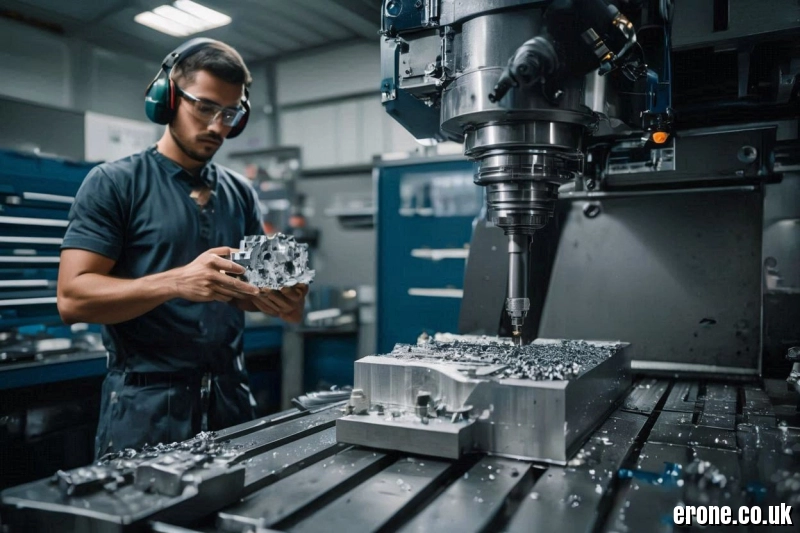
The machine shop at 2 AM has a particular sound. It’s not the roar of the daytime, when people are yelling over spindles and forklifts beep their warnings. It’s a hum. A drone of machines at work, slow and steady, nearly meditative, and as they have nothing to watch over, their doors shut, and their lights throwing long blue rectangles on the concrete floor.
I am in the presence of Marcus who is the supervisor of night shift. He has twenty-two years of CNC machine running. A fine gray grime permanently stains his hands, which cannot be removed by soap.
I listen. I hear the machine.
“No,” I admit.
He nods, still listening. “It’s nervous.”
You push it, it’ll chatter. Leave a bad finish. The part passes inspection, maybe, but it’s stressed. It’ll move later, during assembly. The customer won’t know why it doesn’t fit. They’ll blame their design. But it’s not their design. It’s us. It’s me not listening.”
But the machine’s sound shifts, just slightly. The whine evens out. “There,” he says. “Happy now.”
The Silence of the Day Shift
During the day, the shop is a different world. Salespeople are on the phone. Engineers are reviewing files. Project managers are updating spreadsheets. Everyone is busy, moving, talking.
But in the quiet moments, when a day shift machinist finishes a setup and hits the green button, they do the same thing Marcus does. They listen. They watch the chips curl off the tool. They run a finger along the first part, not measuring, just feeling. This is the ritual. It’s not in the quality manual.
The One That Got Away
Every machinist has a story about the one that got away. The part they shipped that came back. Marcus has his.
“Five years ago,” he says, still staring at the now-happy machine. “Medical component. Titanium. I was rushing. We had a deadline, the customer was breathing down my neck. I skipped a finish pass. The part measured fine.
He pauses. The machine hums.
“Six months later, I get a call. The part failed in surgery. Not catastrophic, thank God. But it didn’t perform. The surgeon had to switch to a backup. The patient was under longer than necessary. All because I rushed. All because I didn’t listen.”
He looks at me. Why are you asking me why I am here at 2 AM? Why I am the one who listens to nervous machines? He says because I am the guy who did not hear that day. And I will have to pay my life long to recoup it.
What You’re Actually Paying For
When you send a RFQ to a shop, you’re not just paying for machine time and material. You’re paying for Marcus’s guilt. You’re paying for the night shift rituals. You’re paying for the decades of mistakes that taught someone to hear the difference between a happy machine and a nervous one.
You’re paying for the institutional memory of a thousand tiny failures that never happened to your part because they happened to someone else’s, years ago, and the lesson was absorbed into the fingertips of every machinist in the building.
This is the invisible line item on every invoice. It’s never listed. It’s never discussed. But it’s the most important thing you’re buying.
The Part That Arrives
When your box comes at last, when you reach out and draw out that perfect, shining part, when you feel the edge of your thumb, when you find it sliding across, and you find out that it is not hard at all, but smooth, and solid, and sure, you will be too blind to know about Marcus. You will never hear of the 2 am changes or the guilt or the listening.
You will simply know that it is right. Solid. Quiet.
That silence is the voice of a promise made. It is the voice of a person devoted enough to listen or pay attention when nobody is around. It’s the sound of CNC machining services that understand the difference between making a part and honoring a trust.
The machine made the chips. But Marcus made the part.


HUAWEI gt 7: Smart Training for Every Outdoor Adventure

The Tech in Your Home is More Advanced Than You Think – Does It Truly Preserve Your Valuables?
